Author: 23magazine

  • Talpool Studio: A Creative Tool for Fashion, Modeling, and Photography

    Talpool Studio: A Creative Tool for Fashion, Modeling, and Photography

    In fashion, the strongest ideas often begin before the shoot. They start as a feeling, a reference, a half-formed image, a pose, a location, a piece of styling, or the question every creative knows well: What could this become? Talpool Studio is built around that exact moment.

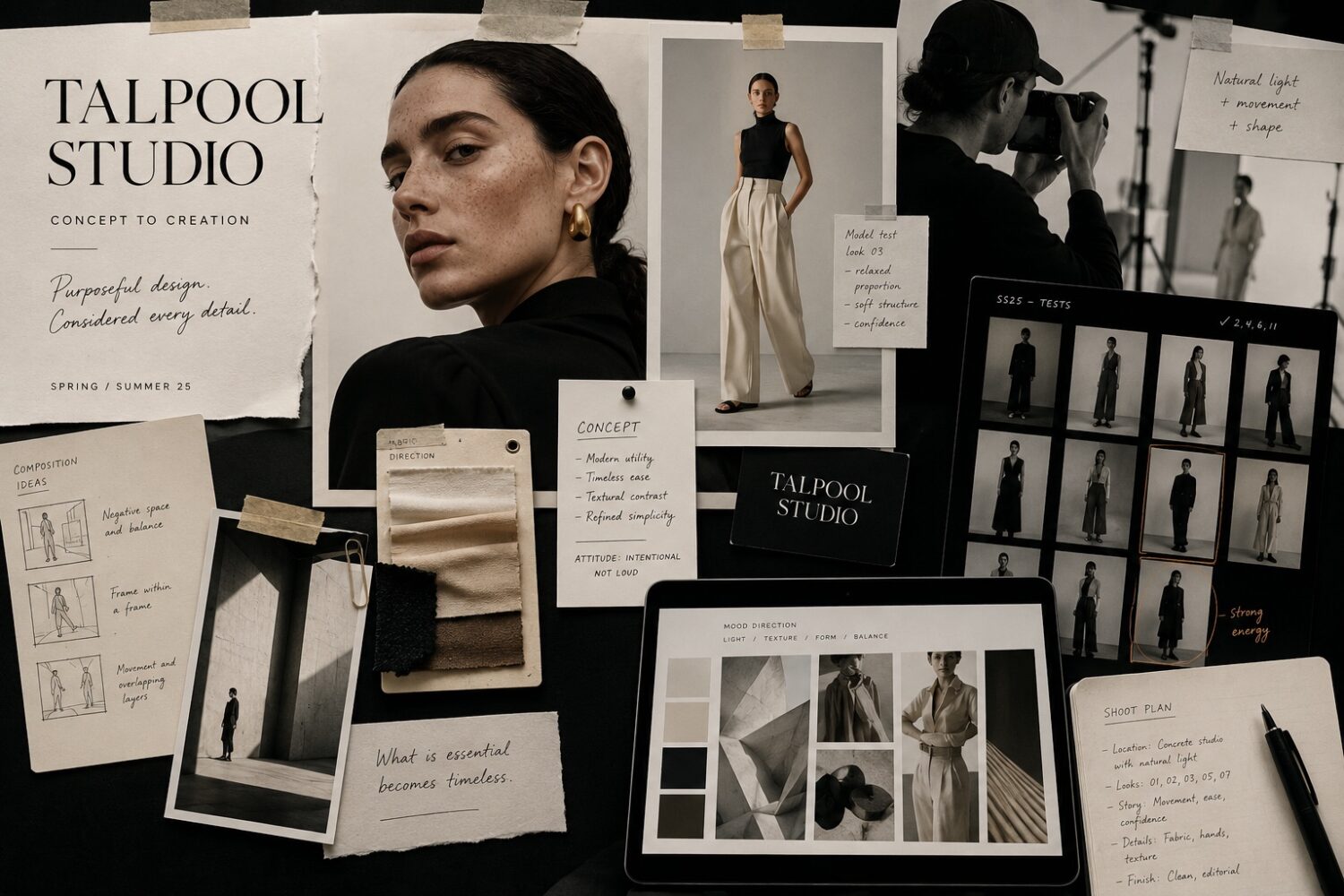
    Designed for models, photographers, stylists, and visual creatives, Talpool Studio is a creative idea-generation platform focused on fashion, modeling, and photography. Its purpose is not to replace artists, photographers, or image-makers. It is not built to copy someone else’s work or reproduce another artist’s visual identity. Instead, Talpool Studio acts as a creative assistant: a tool for exploring concepts, developing shoot ideas, testing visual directions, and helping users think through the possibilities before they step on set.

    Screenshot

    For models, Talpool Studio can help shape portfolio ideas, styling references, posing direction, and image concepts. A model preparing new digitals, editorial-style images, or social content can use the platform to explore different moods and framing options before booking a shoot. It can help answer practical creative questions: Should the image feel clean and minimal? More cinematic? More street-cast? More polished? More natural? In that sense, Talpool becomes less about producing a final artwork and more about helping models understand how to communicate visually.

    For photographers, the tool works as a fast concept-development space. It can help generate shoot inspiration, lighting ideas, composition notes, moodboard-style visuals, and creative prompts that can be adapted into real-world production. Instead of starting from a blank page, photographers can use Talpool Studio to build visual starting points, refine a direction, and create a stronger shared language with models, clients, or collaborators.

    This distinction matters. Talpool Studio is not an AI platform designed to scrape, mimic, or exploit other people’s art. Its value is in idea development, not imitation. Fashion photography has always been built on references: tear sheets, editorials, runway images, cinema stills, casting boards, street style, and moodboards. Talpool Studio fits into that tradition, but updates it for a faster digital workflow. It gives creatives a way to organize inspiration, test directions, and generate new prompts without pretending the machine is the artist.

    The human remains central. The taste, styling, casting, photography, editing, performance, location, and final creative decisions still belong to the person using the tool. Talpool Studio does not replace the photographer’s eye, the model’s presence, or the stylist’s instinct. It supports those decisions by making the early creative process more accessible and less intimidating.

    At its best, Talpool Studio is a sketchbook for the modern fashion image-maker. It helps turn vague ideas into usable directions. It gives models more confidence when planning shoots. It gives photographers a quicker way to communicate concepts. And it gives creative teams a shared visual language before production begins.

    In an industry where image-making is often collaborative, fast-moving, and reference-heavy, Talpool Studio offers something simple but useful: a place to begin.

    www.talpoolstudio.com

    Talpool Studio

    Fashion, modeling & photography idea generation

    Explore style inspo, model feedback, moodboards, image concepts, and shoot direction.

    Visit Talpool Studio
  • RAYE: The Pop Star Who Had to Leave the Machine to Become Herself.

    RAYE: The Pop Star Who Had to Leave the Machine to Become Herself.

    There is a particular kind of artist who does not arrive all at once. They are there in the room for years, writing the hooks, lending the voice, sharpening the pen, learning where the bodies are buried. Then suddenly, when the conditions are finally theirs, they step forward and the world acts surprised. RAYE is one of those artists.

    Born Rachel Agatha Keen in South London, RAYE has always sounded like someone with more lives than the industry knew what to do with. Her voice carries the polish of a pop professional, but underneath it is something older and more bruised: jazz phrasing, gospel ache, R&B confession, blues melodrama, big-band theatre, the kind of emotional precision that makes a lyric feel half-sung, half-survived. She can glide across a dance record, then turn around and deliver a line like she is standing under a single spotlight with nothing left to hide.

    Before the awards, before the standing ovations, before the myth of RAYE as Britain’s independent pop miracle, there was the songwriter. Signed young, working hard, present but not centered, she became one of those names tucked into credits before many listeners knew her face. She wrote for and around the machinery of pop, contributing to songs for major artists while also appearing on glossy dance singles that put her voice into clubs and charts. It was not that she was invisible. It was worse: she was visible in fragments.

    raye

    That tension — being used, heard, but not fully allowed — is central to understanding her rise. RAYE was signed to Polydor as a teenager, but her debut album was delayed for years. In 2021, after publicly expressing frustration that she could not release a full-length project, she left the label and became independent. Her debut album, My 21st Century Blues, finally arrived in 2023 through Human Re Sources, and it sounded like someone opening every locked room at once.

    The album was not neat, and that was the point. It moved through addiction, assault, body dysmorphia, industry sexism, heartbreak, self-disgust, survival, and glamour with the intensity of a woman who had been told to edit herself for too long. On “Hard Out Here,” she sharpened her frustration into a manifesto. On “Ice Cream Man,” she turned trauma into a devastating act of testimony. And on “Escapism.”, featuring 070 Shake, she made a hit out of collapse: a woozy, nocturnal spiral of alcohol, bad choices, revenge, numbness, and the awful clarity that comes after trying to outrun yourself.

    That song changed everything. “Escapism.” became RAYE’s first UK number one single in January 2023, a victory made more potent by the fact that it happened after she had left the traditional label structure that had failed to deliver her debut. It was not a sanitized empowerment anthem. It was messy, funny, ugly, seductive, exhausted. It sounded like the inside of a bad night and the morning after. Pop often asks women to turn pain into something pretty. RAYE made it theatrical, but she did not make it polite.

    Her lyrics work because they refuse to flatten contradiction. She is glamorous and ashamed, devastated and hilarious, wounded and vain, spiritual and deeply human. She writes like someone who understands that survival is rarely graceful in real time. There is a bluntness to her language that cuts through the lushness of the arrangements. She does not hide behind abstraction. She names the feeling, then performs around it, over it, through it, until the song becomes both confession and costume.

    By the time the 2024 BRIT Awards arrived, the industry could no longer treat RAYE as a side character in her own story. She won six awards in one night — including Artist of the Year, Album of the Year for My 21st Century Blues, Song of the Year for “Escapism.”, Best New Artist, Best R&B Act, and Songwriter of the Year — setting a new record for the most BRIT wins by an artist in a single ceremony. The image was almost too perfect: an independent artist, once held back by the system, standing on its biggest stage and leaving with her arms full.

    But the most interesting thing about RAYE is not that she won. It is what she chose to do with the freedom that followed.

    Her second album, THIS MUSIC MAY CONTAIN HOPE., released in March 2026, expands her world rather than shrinking it to fit the streaming era. At 17 tracks and over 70 minutes, the record is ambitious, cinematic, emotionally oversized, and deliberately resistant to the idea that modern pop must be brief, minimal, and algorithmically smooth. It moves through jazz, soul, blues, orchestral pop, big band, house, spoken-word passages, and old-Hollywood grandeur, treating the album less like a playlist and more like a staged emotional epic.

    The title is important: this music may contain hope. Not certainty. Not happiness. Not healing packaged as a clean brand message. Hope. The fragile, inconvenient kind. The kind that comes after self-destruction, after public doubt, after romantic wreckage, after admitting you are not okay and still deciding to sing.

    The album’s lead single, “WHERE IS MY HUSBAND!”, is RAYE at her most knowingly dramatic: big, brassy, comic, theatrical, and desperate in quotation marks and exclamation points. It plays with old-school ideas of longing and romantic fantasy, but there is a wink in the performance. RAYE is too self-aware to simply play the damsel. She becomes the narrator, the character, the chorus girl, the woman in the mirror, and the woman laughing at the mirror all at once.

    Then there is “Nightingale Lane.”, a more sweeping, orchestral moment that leans into her ability to make a song feel like a memory turning into cinema. RAYE’s best work often has this quality: she sings as if she is not just remembering an event, but restaging it in higher definition, adding strings, smoke, and a spotlight because the truth deserves production value.

    Her collaboration with Hans Zimmer on “Click Clack Symphony.” feels like the clearest statement of where RAYE wants to go next. Zimmer, whose name is synonymous with cinematic scale, gives the song an orchestral weight that matches RAYE’s flair for drama. But the track is not simply “pop star gets film composer.” It works because RAYE already writes like a director. Her songs have blocking, costume, lighting, character, scene changes. Zimmer does not make her world bigger so much as reveal that it was already built for the big screen. The single was released ahead of the album in March 2026 and pairs contemporary pop movement with symphonic arrangement, turning the sound of heels — the titular click-clack — into a rhythm of re-entry, of a woman stepping back into life.

    raye

    That is the deeper arc of RAYE’s career: not just independence as a business model, but independence as authorship. Owning the masters matters. Leaving the label matters. Proving the executives wrong matters. But the artistic independence is even more interesting. RAYE is no longer trying to choose between dance vocalist, soul singer, pop writer, jazz student, survivor, diva, or diarist. She is all of them, sometimes in the same song.

    In an industry that often rewards artists for becoming easier to categorize, RAYE has become more excessive, more emotional, more musically literate, more herself. Her recent work does not smooth out the contradictions that made My 21st Century Blues compelling. It gives them an orchestra.

    RAYE’s rise is often framed as revenge, and in some ways it is. But revenge is too small a word for what she is building. Revenge looks backward. RAYE is looking forward, even when she is singing from the wound. Her story is not simply that she escaped the machine. It is that once she did, she built a stage large enough for every version of herself that the machine could not hold.

  • Reneé Rapp BITE ME: Inside the Album, Tour, and Queer Pop Legacy

    Reneé Rapp BITE ME: Inside the Album, Tour, and Queer Pop Legacy

    From Broadway to Pop’s Fast Lane

    Reneé Rapp BITE ME

    Reneé Rapp came up in pop’s fast lane with a voice built for belt and a radar for the truth. After all, her rise from Broadway’s Regina George to breakout debut LP was unusually quick. Now, she’s returned with a sharper, louder chapter: BITE ME, her second studio album, released 1 August 2025 via Interscope. As a result, it feels like the kind of big-swing pop record that turns an ascendant artist into an arena headliner—arriving with a clear point of view about queerness, fame, and who gets to tell the story.

    Snow Angel to BITE ME: The Evolution

    Reneé Rapp BITE ME

    If 2023’s Snow Angel established Rapp as a songwriter unafraid of ugly feelings and clean hooks, BITE ME is her confrontation era. Instead of retreating, the 12 tracks push into pop-rock edges and power-pop punch while staying radio-ready. The album cycles through defiance (“Leave Me Alone”), spiralling self-talk (“Mad”), and post-situationship hauntings (“Why Is She Still Here?”). In fact, Rapp explained in interviews that the project was a hard-won step toward self-acceptance, noting how the writing process helped her “love [herself]—and [her] life” with more clarity after the adrenaline rush of her debut.

    Chart Success and Global Reach

    Reneé Rapp BITE ME

    Commercially, BITE ME landed with real force. In the U.K., it became her first Official Albums Chart No. 1 and also topped the Official Vinyl Albums Chart—an old-school flex that suits her big-chorus ambitions. Meanwhile, stateside, the set earned her first No. 1 on Billboard’s Top Album Sales, underscoring a fanbase willing to buy in, literally. Consequently, those chart moves—plus early European traction—signalled a level-up from the buzzy success of Snow Angel and positioned BITE ME as one of late-summer pop’s event releases.

    Pop With a Purpose

    Reneé Rapp BITE ME

    The record’s rollout doubled as a statement of values. Rapp has been frank about making pop that is explicitly queer—“everything I make is gay,” she told one profile—and about resisting the flattening pressures that come with being read as a spokesperson. Moreover, that tension has defined a broader “sapphic pop” wave—MUNA, Chappell Roan, Towa Bird—where visibility hits scale and the discourse grows teeth. Rapp’s own stance sits in the messy center of that conversation: joyful, combative, and uninterested in palatability for its own sake.

    From Mean Girls to Music Icon

    However, none of this exists in a vacuum. Rapp’s cultural footprint widened in 2024 with the Mean Girls musical film, where she reprised Regina George and co-wrote “What Ifs” for the soundtrack alongside a headline-grabbing team-up with Megan Thee Stallion on “Not My Fault.” Therefore, the film cycle proved two things: she can carry a major IP, and she can write to brief without sacrificing bite. The synergy bled into the BITE ME era, where her punchline-heavy candor and star power felt baked-in, not borrowed.

    The Bite Me Tour Experience

    Onstage, that confidence scales. The Renee Rapp Bite Me Tour kicked off 23 September 2025 at Red Rocks before moving into full arena mode—Barclays Center, TD Garden, Madison Square Garden, Kia Forum—across North America, with European dates into early 2026. Support has come from artists like Syd and Ravyn Lenae, a curatorial through line that nods to R&B sophistication and queer lineage while keeping the night wide-angle and contemporary. As a result, early U.S. reviews describe arena-grade production and a front-person who can weaponize intimacy at scale.

    A Voice That Cuts Through

    There’s also the matter of voice—literal, not metaphor. Rapp’s belt is theatre-honed but pop-disciplined, a top-line instrument that lets her sprint up a hook without sandblasting the emotion underneath. Because of this, her technical ability—obvious on Snow Angel ballads and sharpened on BITE ME’s rock-leaning corners—helps explain why she jumped from critically tipped to chart-proven in just 24 months. Although pop in the 2020s has tilted toward whispery vocals and diaristic entries, she still sings like she’s trying to reach the back row—and the hook remembers you in the morning.

    Cultural Impact Beyond the Charts

    Reneé Rapp BITE ME

    Culturally, Rapp’s impact lands in two registers. First is representation with teeth. She talks to her audience like peers, not punch-card fans, telling LGBTQ+ listeners to “find your community” amid political backlash and treating Pride stages as both party and pressure release. In addition, her visibility within queer pop feels as popular as it is politicized, and that posture matters. Second is authorship. Between co-writes for Mean Girls, her turn in The Sex Lives of College Girls, and the autobiographical wiring of BITE ME, she’s mapped a route for multi-hyphenates who refuse to silo their talents just to be taken seriously in one lane.

    Breaking Through the New Way

    Her arc also tracks with the industry’s recalibration around what “breakthrough” looks like now. Rapp didn’t arrive via a single viral moment; she stacked theatre bona fides, prestige TV visibility, and a debut album with sticky songs and touring proof of concept. Therefore, that mosaic approach helped her weather the usual gatekeeping—up to and including high-profile awards snubs, which arguably stiffened the resolve behind Renee Rapp BITE ME’s more combative writing. Ultimately, when the second record then converts at the box office (arenas) and the tills (album sales), it reads like an argument settled.

    The Bigger Picture

    Zoom out, and Rapp’s story is the story of 2020s pop’s new center. The songwriting is diaristic. The aesthetics borrow from rock’s bite and R&B’s gloss. The career is multimedia by design. Above all, the politics aren’t add-ons; they’re structural, lived in public, memeable one minute, mortal the next. In that landscape, BITE ME is less heel-turn than clarifier: a neon sign for where she’s going and who she’s bringing with her. Consequently, the tour—loud, queer, maximalist—makes a convincing case that there’s abundant demand.

    Reneé Rapp BITE ME

    Conclusion: Setting the Terms

    None of this erases where she started. Snow Angel remains the origin story: a debut that introduced her frank lyricism and a fanbase that shows up in numbers. Still, the sophomore record is where she sets the terms—commercially validated in London vinyl shops and U.S. cash registers; narratively coherent in interviews that reject tidy optics; sonically bigger without losing the sting. In conclusion, the cultural impact isn’t just visibility; it’s leverage. And right now, Reneé Rapp is using it—to make the work gayer, the stages bigger, and the room for unruly pop girls even wider.

    .

    Sources

  • The War You’re Not Meant to Watch

    The War You’re Not Meant to Watch

    Why So Much of the Media Stays Silent on Gaza — and Who’s Keeping It That Way

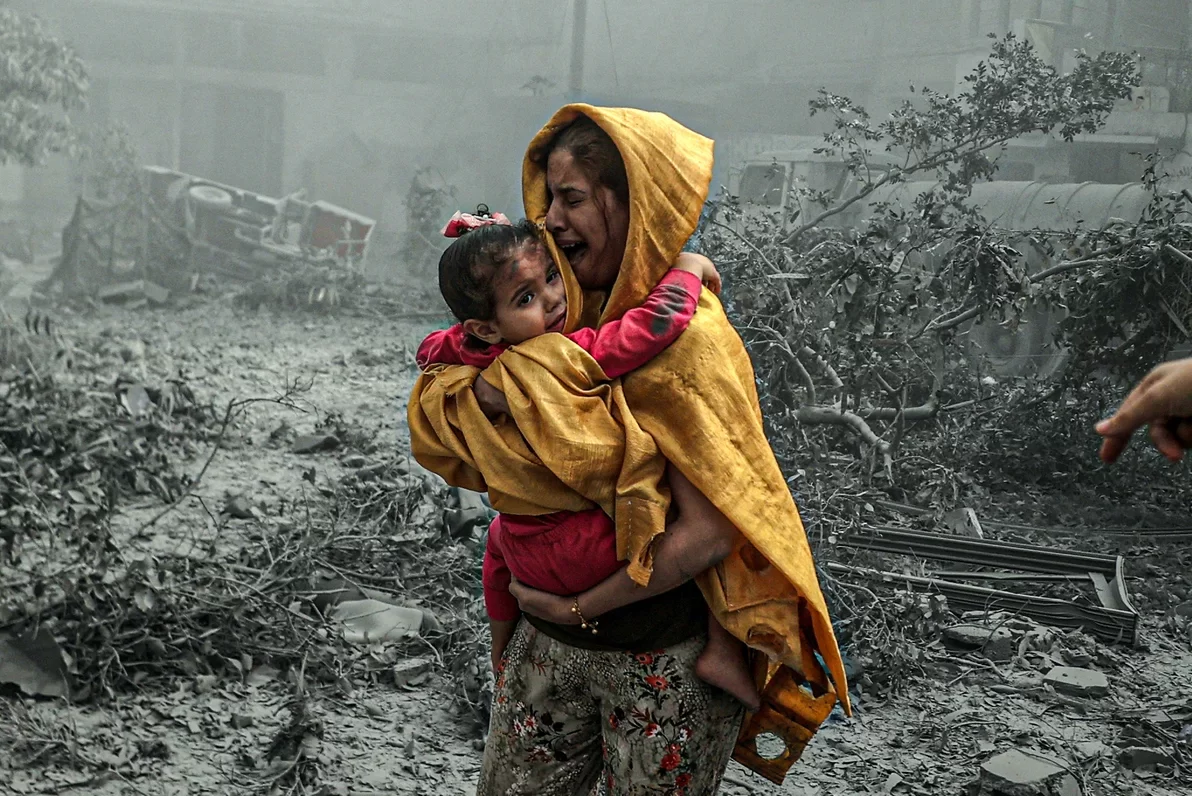
    GAZA CITY, GAZA - JULY 28
    GAZA CITY, GAZA – JULY 28

    It’s a place you’re constantly told is “complicated.” It’s always “escalating,” “sensitive,” or “deeply rooted in history.” Gaza—the narrow coastal strip home to over 2 million Palestinians, half of whom are children—is more than just a flashpoint. It is, for many in Western media, a no-go zone for truth.

    When airstrikes rain down on residential buildings, when hospitals flood with the wounded, when journalists are killed, the coverage is often muted, symmetrical, sanitized. Terms like “clashes” and “crossfire” erase the reality of disproportionate force. Editors spike stories. Headlines are rewritten to imply balance, even when there is none. Why?

    This is not a story about journalism failing. It is a story about journalism being forced to fail—by pressure campaigns, political intimidation, career fear, and corporate caution. Gaza has become a litmus test for editorial independence. And too often, the institutions that claim to speak truth to power fall conspicuously silent when that power is pro-Israel.

    The Invisible Editorial Hand

    Ask any Middle East correspondent off the record, and they’ll tell you the same thing: there is always someone looking over their shoulder when it comes to Gaza. “There’s an extra layer of vetting,” says one former senior reporter for a major U.S. network. “You could cover war zones all day. But the minute the story is about Gaza, everything slows down. Legal gets involved. PR gets involved. Standards and practices suddenly take the front seat.”

    Editors use vague language like “context,” “balance,” or “objectivity” to gut a piece of its impact. Photographs of wounded children are deemed too “disturbing.” Using the word “occupation” is quietly discouraged. Headlines are neutralized to avoid “backlash.”

    But backlash from whom?

    The Pressure Machine

    In the U.S., U.K., and Canada, there are well-organized lobbying groups that monitor media coverage of Israel-Palestine with aggressive efficiency. These include:

    • AIPAC (American Israel Public Affairs Committee) and its local surrogates, which wield enormous political and donor influence.
    • CAMERA (Committee for Accuracy in Middle East Reporting in America), which regularly pressures outlets, journalists, and editors with complaints, calls, and public campaigns.
    • HonestReporting, a media-monitoring group that targets reporters and editors it accuses of “anti-Israel bias.”

    These groups don’t just write letters. They mobilize. They flood inboxes. They call advertisers. They orchestrate social media campaigns. They contact editors directly.

    And it works.

    “I had a piece about the bombing of a refugee camp held for over a week,” said one journalist from a major American daily. “My editor finally said, ‘We’re not trying to pick a fight with CAMERA right now.’ That was it. No notes on the reporting. Just politics.”

    Self-Censorship in Newsrooms

    The result isn’t just what gets cut—it’s what never gets written. Many journalists know that writing truthfully about Gaza can tank careers. Editors quietly steer clear of assigning deep dives or investigative pieces that might “cause problems upstairs.”“It’s not like someone walks in and says ‘Don’t write this,’” said a former BBC producer. “It’s more like: you know what will create stress, what will make your boss uncomfortable, what could ruin your chance at the next job. So you pull your punches. Everyone does it.”

    And when a reporter doesn’t pull back? The system often pushes back for them.

    Mehdi Hasan, formerly of MSNBC, openly criticized his own network’s lack of coverage and later left the company. Longtime Middle East correspondents like Robert Fisk and Chris Hedges have spoken about editorial silencing, reassignment, or marginalization.

    “You want to talk about Gaza honestly? Be prepared to lose access, lose your job, or lose your platform,” said a freelance photojournalist who has worked in Rafah and Khan Younis. “It’s career suicide.”

    Corporate Fear and Political Ties

    Most major Western media outlets are owned by large conglomerates with business interests and political connections. This includes:

    • Comcast (NBCUniversal): Political donors to pro-Israel politicians.
    • News Corp (Fox, Wall Street Journal): Openly right-wing, with editorial lines that support Israeli policy.
    • Disney (ABC): Historically cautious on any story that risks brand image.
    • Warner Bros. Discovery (CNN): Caught in multiple public criticisms of biased coverage, but slow to change.

    These companies don’t need to be told what to do. They operate with a built-in risk calculator. If the story could alienate powerful advertisers, provoke lobby groups, or threaten political relationships—it’s softened, delayed, or dropped altogether.

    And in the streaming and podcast world, the rules aren’t much better. Entire series exploring Palestinian life have been pitched and rejected for being “too political,” “too risky,” or—most ironically—“not relevant.”

    Social Media, Algorithmic Censorship, and Platform Bias

    For independent journalists and activists who try to fill the silence, a new problem arises: platform censorship.

    Instagram has been accused of suppressing Palestinian content, sometimes removing stories showing violence against civilians with vague justifications like “violating community standards.” Twitter/X shadowbans Palestinian voices. TikTok removes footage deemed “sensitive”—often targeting those documenting airstrikes or mass displacement.

    And it’s not a conspiracy theory. Facebook whistleblowers and former moderators have confirmed internal bias. In 2021, a leaked document showed Facebook staff raising alarm about systematic removal of Palestinian content while Israeli advocacy remained untouched.

    The result? A war the world sees through a pinhole.

    The Human Cost of Silence

    While media hesitates, people die. Infrastructure collapses. Stories go untold. Each time a newsroom softens a headline or delays an exposé, they’re not just shaping narratives—they’re shaping outcomes.

    Gaza is not voiceless. It is full of artists, doctors, photographers, teachers, and journalists—many of whom have died trying to show the world what is happening. But without amplification, their voices are buried beneath rubble and spin.

    “When Western media is silent,” said a Palestinian journalist who has lost four colleagues to airstrikes, “it gives cover. It tells the world that our lives are negotiable.”

    There Are Exceptions

    Not every outlet is silent. Publications like The Intercept, Democracy Now!, Mondoweiss, and some segments of Al Jazeera English report with depth and courage. Independent journalists like Sharif Kouddous, Mohammed El-Kurd, and others have built audiences despite the obstacles.

    But these remain outside the mainstream—and often face their own censorship battles.

    The Way Forward

    The solution isn’t simply “more balance.” It’s honesty. Gaza doesn’t need equal billing with Israeli government talking points—it needs truth. That includes acknowledging power imbalances, settler violence, blockade policies, and the real toll on civilian life.

    Media institutions must confront their own complicity and ask: who are we protecting, and who are we failing?

    It’s also up to readers and viewers to demand more. To ask not just what’s being shown, but what’s being hidden—and why.

    Because silence is never neutral. In the case of Gaza, it is deadly.

  • Art As Resistance in 2025

    Art As Resistance in 2025

    How Five Artists Use Creativity to Fight Civil Unrest

    From Gaza to Los Angeles, and from back-alley rallies to major museums, artists are leading the charge in spotlighting injustice. In 2025, amid a backdrop of the Palestinian genocide, war in Ukraine, and ICE raids in the U.S., five creatives—Nadya Tolokonnikova, Doechii, Patrick Martínez, Malak Mattar, and Hazem Harb—are using language, paint, performance, and collage to push back. Through their work, they channel echoes of historical resistance: the legacy of Pussy Riot, the mural movements of the First and Second Intifadas, and Ukraine’s post-2014 cultural revival. Ultimately, this is art as activism—urgent, unapologetic, and global.

    1. Nadya Tolokonnikova (Pussy Riot): Performing Protest Behind Bars

    In early June 2025, Nadya Tolokonnikova—co-founder of the Russian protest-art collective Pussy Riot—entered a mock prison cell at LA’s Museum of Contemporary Art (MOCA) for a 10-day durational performance titled Police State. Designed to provoke, the piece recreated her 2012–13 incarceration in a Russian labor camp—16-hour workdays making uniforms, sleepless nights, and punitive conditions that stripped away basic human dignity. With precision, she brought the physicality of repression to downtown Los Angeles, meticulously reconstructing her cell complete with bunk, toilet, sewing machine, surveillance cameras, and a mixer that blended Russian prison sounds with lullabies and her own raw screams.

    However, midway through the performance, real-world events began bleeding into the exhibit. Federal ICE raids in the nearby garment district sparked spontaneous protests and forced MOCA’s temporary closure. National Guard troops arrived. Helicopters circled overhead. Nevertheless, Nadya remained inside—live-streaming scanner audio and protest chants directly into the cell’s speakers. Museum guards reportedly announced, “Police State exhibit closed due to police state,” and still, she carried on—in solidarity and defiance.

    To understand the deeper meaning, it helps to revisit Pussy Riot’s origins. Back in 2011, the group formed in Moscow, crashing the Cathedral of Christ the Saviour in protest of Vladimir Putin’s growing church-state alliance. After her 2012 arrest, Tolokonnikova spent two years in a Russian prison and emerged as an international symbol of feminist resistance and political art.

    Today, Police State continues that legacy. By connecting Russian authoritarianism to U.S. crackdowns, it exposes the slow erosion of civil liberties in real time. In doing so, Tolokonnikova’s work blurs the line between past and present, performance and protest—making her not just a witness to injustice, but a weapon against it. @nadya

    Pussy Riot Resistance

    2. Doechii (Rapper/Activist): Spitting Truth at Awards Shows

    In 2025, Tierra Doechii—known mononymously as Doechii—has been tearing up the hip-hop scene both musically and politically. One of the year’s most headline-making moments came during the BET Awards, where she seized the stage after winning Best Female Hip-Hop Artist. Rather than simply celebrating, she fired off a blistering critique of the Trump-era ICE raids sweeping through Los Angeles. “This is a ruthless attack on our neighborhoods,” she declared, boldly calling the deployment of National Guard troops an “act of aggression against immigrants.” Within minutes, social media lit up, and protest organizers rapidly shared her speech across digital platforms.

    Importantly, her message wasn’t just performative—it drew from a long tradition of Black and Brown resistance in performance art and hip-hop. From the revolutionary voices of Public Enemy to the political bars of Killer Mike, Doechii’s statement echoed a lineage where mainstream recognition becomes a platform for defiance.

    Furthermore, Doechii’s intersectional activism strategically links race, migration, gender identity, and state violence. By doing so, she shows how music can serve as a vehicle for systemic critique, and how a new generation of artists is using performance as protest. In the broader context of 2025 protest art, her voice is not just resonant—it’s revolutionary. @doechii

    Doechii Resistance

    3. Patrick Martínez (Visual Artist): Street Art as Calling Card

    Los Angeles painter and muralist Patrick Martínez took his resistance straight to the streets. With anti-ICE rallies blooming in May and June, Martinez supplied vibrant, handmade protest signage—posters, stencils, spray-painted placards—during marches in the Fashion District and near the Geffen Contemporary. His designs often echoed Barbara Kruger’s iconic confrontational graphics, striking at themes like freedom, surveillance, and state violence .

    Historical roots: Martínez’s work builds on L.A.’s vibrant mural tradition—from Chicano muralists of the ‘70s to the street art waves of the 2000s. His banners become living artworks, mobilizing communities and reinforcing that resistance is collective, not solo. @patrick_martinez_studio

    Patrick Martínez Resistance

    4. Malak Mattar (Palestinian Painter): Chronicles of Genocide

    Twenty-five-year-old Malak Mattar, a Palestinian painter from Gaza, remains a beacon of color in a time of devastation. Born during the 2014 Gaza War, Mattar turned to art for survival. Now, in 2025, she’s earning international acclaim—staging Falasteen, a solo show at Central Saint Martins in London, the first Palestinian artist ever given such a platform there. The centerpiece piece, No Words, stands over two meters tall—a monochrome, brutalist vision of bodies and death that critics have likened to Picasso’s Guernica .

    In her own words: “In the time of genocide, art is a powerful way of resisting the systematic dehumanisation of our people” ). Her presence evokes the New Visions group that sprang from the First Intifada—artists who used local materials to document resistance, inspiring generations. @malakmattarart

     Malak Mattar Resistance

    5. Hazem Harb (Collagist & Historian): Reassembling Memory

    While less famous on social media, Palestinian-Diaspora artist Hazem Harb is making waves in museums. Born in Gaza, raised across Rome and Dubai, Harb merges archival documents, photo fragments, maps, and found objects into collages that meditate on displacement, fragmentation, memory, and erasure. His 2025 exhibition Not There, Yet Felt in Dubai traced lost hometowns, linguistic loss, and cultural violence, embodying modern Palestinian history in tactile form.

    Historical roots: Harb follows in the tradition of intellectual documentarians like Sliman Mansour and Nabil Anani, bridging First Intifada aesthetics with new digital-political realities—embodying “committed art” that fights censorship through preservation . @hazemharb

    Hazem Harb Resistance

    Why This Moment?

    StruggleArtist(s)ModalityHistorical Echo
    ICE raids in L.A.Tolokonnikova, Doechii, MartínezPerformance, music, public graphicsU.S. civil rights rallies, Chicano mural movement
    Palestinian genocideMattar, HarbPainting, collage, archival artNew Visions (1989), documentary traditions
    Global authoritarianismTolokonnikovaInstitution-based performancePussy Riot’s cathedral stunt, Gulag parentage
    Call-out cultureDoechiiAwards-stage interventionRap as resistance, NWA, Public Enemy
    Diaspora memoryHarbArchival collage, exhibitsPalestinian historiography, Nakba commemoration

    A Deeper Dive: Symbols of Resistance

    Punk Prayer to Prison Cell

    Pussy Riot’s 2012 Punk Prayer was brief but iconic: masked women shouting women’s rights and opposing Putin’s fusion of politics and religion inside a cathedral. That arrest ignited Petitions, concerts, protests, and elevated Tolokonnikova and Alyokhina to global prominence.

    Police State continues that story, dismantling the line between personal biography and political art. By sewing protest slogans into military uniforms, generating noise-based soundscapes, and enduring institutional surveillance, Tolokonnikova embeds resistance in time itself .

    Pussy Riot Resistance

    Rhyme and Revolution

    Doechii’s protest rap joins a proud rap tradition—from Rage Against the Machine to modern trailblazers like Killer Mike—that embraces protest as performance. Her refusal to remain silent upon winning mainstream recognition keeps hip-hop’s activist flame alive in L.A.’s current crisis.

    Doechii Resistance

    Murals on the march

    From Mexico to East L.A., murals have always drawn communities together. Martínez’s signage skateboards that collective aesthetic into protests. His work echoes the 1970s Chicano political mural “We Are Not Cockroaches” and the ’90s AIDS and immigrant rights poster waves.

    Patrick Martinez Resistance

    Painting a genocide

    Mattar’s work—especially No Words—uses stark contrasts of black and white and massive scale to mirror musical traditions of Picasso’s Guernica (Spain) and Anselm Kiefer (Germany). She also taps watercolors and color symbolism—linking olives, oranges, doves—as coded signs of Palestinian identity.

    Malak Mattar Resistance

     Fragments as memory

    Harb’s collages collapse space-time: an old schoolbook, a village map, a broken coffee mug—these pieces reassemble lost homes. His work follows Palestinian archival practices, but updated for the digital age: each collage an act of resistance against erasure.

    Hazem Harb Resistance

    Context: Why Art Matters Now

    1. Visibility in media deserts – Gaza’s bombings and migrant raids often receive incomplete or biased coverage. Art bypasses that scarcity, making visceral arguments for empathy and justice.
    2. Emotional truth versus data – Hard stats feel abstract; art forces empathy. Silence becomes noise, distance becomes skin.
    3. Global connectivity – Tolokonnikova connects L.A.’s raids to her Russian experience. Mattar and Harb link diaspora trauma to new generations. Protest art becomes cross-border.
    4. Historical continuity – From Pussy Riot (2011), through Ukraine’s 2014 cultural boom, to this moment—the baton of resistance-art is being handed again.
    5. Institutional infiltration – Whether inside MOCA, on global stages, or street corners, these works blur the line between art and protest, legitimacy and defiance.
    No King Resistance

    The Road Ahead: When Resistance Becomes Routine

    • Doechii’s trajectory: will she use her debut album for an activist platform or pivot toward mainstream pop personas? The next year could define whether protest remains her central act.
    • Tolokonnikova’s next act: Police State might return, but could she adapt to other authoritarian contexts—Hong Kong, Iran—amplifying solidarity networks?
    • Mattar’s global canvases: with increasing exhibitions anticipated in the U.S. and Middle East, her visuals could shape discourse for Palestinian rights in the art market and academia.
    • Harb’s archive labs: as history digitizes, his collages might become part of university collections, fueling future research and memorial initiatives.
    • Martínez’s mural politics: can local signage evolve into permanent murals—creating long-term visual infrastructure for immigrant rights?
    Ice Sweeps Resistance

    Conclusion: Creativity Surges Where Repression Rises

    In 2025, art is not optional—it’s essential. When governments silence journalists, harass immigrants, and bomb civilians, these creative voices—through their paintings, performances, song, and design—reclaim narrative, memory, and justice. They argue: if protest must escalate, let it do so through paint and poetry. If repression sweeps like wildfire, let art be the hose that restores humanity.

    The artists we’ve spotlighted are doing more than reacting—they’re shaping movements. Their legacy echoes street resistance from Ferguson, mural workshops in Palestinian camps, graffiti in Kyiv, suffragette banners, and punk interventions in the Kremlin. Each stands in solidarity with the voiceless—and each, in their own medium, is transforming civil unrest into acts of collective defiance.

    Because in the end, as Nadya Tolokonnikova said in her cell: “No society is perfect… we all have to be brave.” And art is where that bravery meets visibility, time after time.

    Home

    For full documentation, click references.

  • The New Vanguard: How Artists Are Reframing The Visual Code

    The New Vanguard: How Artists Are Reframing The Visual Code

    By Noel Bentley @noelbentley_

    The New Vanguard: How Late Millennial and Gen Z Artists Are Rewriting the Visual Code

    In an era where social media posts blur into digital wallpaper and AI tools flood the visual landscape with artificial precision, a new generation of artists are pushing back—not by returning to the past, but by carving radically personal futures. Born between the late ’80s and early 2000s, this cohort of photographers, illustrators, muralists, and sculptors are using every medium—from paintbrush to pixel—to reclaim creative space and assert authorship in a time of algorithmic curation.

    They aren’t waiting for permission. They’re rewriting the rules.

    Haris Nukem: Hyperreal Humanity

    Haris Nukem, born in Bosnia and raised in London, has become synonymous with hyper-saturated portraits of tattooed, defiant youth. His work merges fashion editorial sensibility with documentary intimacy. Exhibited at London’s Maddox Gallery and featured in fashion campaigns, Nukem’s portraits vibrate with texture—layered fabrics, oil-slick skin, gold, and grime—all lit like contemporary altarpieces.

    In a 2021 Red Bull interview, Nukem shared, “I’ve always been excited by visuals, pop imagery and the idea behind what defines a brand. I was obsessed with drawing as a kid and I wanted to be a comic-book artist.” It’s no surprise—his portraits feel storyboarded, theatrical, yet real. He’s built his own visual brand, and it speaks fluently to the street and the studio alike. @harisnukem

    Nadia Lee Cohen

    Nadia Lee Cohen is a British photographer, filmmaker, and artist renowned for her vivid, cinematic imagery that draws heavily from mid-20th-century Americana and British pop culture. Born in Essex in 1990, she was raised on a rural farm, where her early creative endeavors were nurtured by her parents, who assisted her in constructing sets for her initial film and photography projects. She pursued her passion at the London College of Fashion, earning both BA and MA degrees in fashion photography. After relocating to Los Angeles, Cohen found inspiration in the city’s contrasting realities—the allure of Hollywood’s glamour juxtaposed with its underlying grit—which became a central theme in her work. Her debut monograph, Women (2020), is a collection of 100 stylized portraits that explore the complexities of femininity, often likened to film stills from nonexistent movies. This project garnered critical acclaim and solidified her reputation in the art world. @nadialeecohen

    Qiana Mestrich: Archiving Resistance

    In New York, interdisciplinary artist Qiana Mestrich is re-centering Blackness, motherhood, and memory within visual culture. A writer, photographer, and founder of the acclaimed blog Dodge & Burn: Decolonizing Photography History, Mestrich’s layered collage works investigate the silences of history. In 2025, she was awarded the Saltzman Prize by the Center for Photography at Woodstock, recognizing her for “interrogating established canons and exploring the roles of memory, motherhood, and cultural production.”

    Her exhibitions at ICP and MoMA PS1 foreground Black familial life, domestic labor, and inherited trauma—not through spectacle, but through subtle, layered storytelling. “I see photography as a tool for writing history differently,” Mestrich told Vogue in April 2025. Her work makes you look again—at what’s visible and what’s been deliberately obscured. @qianamestrich

    John Yuyi: The Medium Is the Body

    Taiwanese artist John Yuyi is at the forefront of a new kind of body art—one that reflects our filtered, hyper-documented reality. She has tattooed Instagram icons on her skin, posted photos of herself layered in emojis and QR codes, and built visual commentaries on disconnection in the age of digital addiction. In a world where every selfie is part performance, Yuyi’s work makes visible the paradoxes of self-curation.

    Her collaborations with Gucci, multiple solo shows in Tokyo and New York, and projects for Dazed and Colette Paris position her as a bridge between internet aesthetics and gallery walls. “I think a lot of people from our generation are experiencing this digital identity crisis,” she said in a 2018 interview with Office Magazine. “I just express it in a more extreme way.” @johnyuyi

    Maya Fuhr: Analog Vulnerability

    Hailing from Toronto, Maya Fuhr uses analog photography to explore intimacy, imperfection, and our complex relationship to beauty and waste. Her 2017 project Eco Femme, featured on Refinery29, tackled environmentalism through surreal still lifes built from decomposed fruits and discarded objects. “I want to create images that evoke emotion and provoke thought,” she stated in her 2022 Domestika course on creative analog photography.

    Fuhr’s editorial work has appeared in i-D, Vogue Italia, and King Kong Magazine, but she continues to emphasize handmade sets, tactile processes, and non-commercial storytelling. Her photos feel soft and personal, like a diary page torn out and blown up to gallery scale. @mayafuhr

    Ten Hundred: Pop Surrealism

    Peter Robinson, known professionally as Ten Hundred, is a Michigan-based painter, muralist, and designer whose pop-surrealist style blends tribal patterns, bold color palettes, and cartoon-inspired characters. Originally a musician, Robinson turned to visual art full-time and built his career largely through YouTube, where he documents his process for an audience of over 700,000 subscribers.

    “I want my art to feel like it was pulled from a dream,” Ten Hundred explained in an interview with Beautiful Bizarre. His work, which adorns walls from Tokyo to Miami, invites viewers into a universe of mythical creatures and neon textures—a visual language that’s instantly recognizable and joyously weird. Unlike many of his peers, he’s self-taught and self-marketed, and that independence shapes his whole practice. @tenhun

    Kiptoe: Narrative in Motion

    Matt Dean, better known as Kiptoe, is a Los Angeles-based muralist and illustrator whose large-scale street art fuses narrative storytelling with dynamic motion. A former athlete, Kiptoe’s work reflects that kinetic energy—figures twist, leap, and cascade across brick walls, often incorporating themes of mythology, fantasy, and nature.

    Through YouTube and global mural tours, Kiptoe has built a dedicated following by making the mural-making process transparent. “My mission is to spread color and creativity to every corner of the globe,” he said during a TEDx talk in California. Whether painting in Brooklyn, Bangkok, or Bogotá, he infuses every city wall with a sense of wonder. @kiptoe

    Choots: Doodling Dimensions into Urban Landscapes

    London-born artist Choots (James Chuter) transforms urban spaces into vibrant realms of imagination. Drawing inspiration from clubbing culture, ancient civilizations, marine life, skate graphics, and dream states, his work combines spontaneous doodles with structured compositions. This fusion creates artworks that invite viewers into otherworldly experiences, populated by his signature ‘Dribble’ characters—benevolent beings that emerge from intricate patterns and vivid colors.

    Choots’ journey began with detailed black-and-white ink drawings, gradually evolving into large-scale murals. In 2017, he painted a section of Sydney’s Bondi Beach sea wall, leading to further commissions in New York and London. His murals, such as those on London’s Shoreditch Art Wall, showcase his ability to scale his intricate designs to monumental proportions, captivating passersby with their complexity and charm. 

    Beyond murals, Choots produces a range of artworks, including limited edition prints, hand-painted resin figures, and custom commissions. His piece “Jhana,” a collaboration with Rugtomize, exemplifies his versatility, blending traditional motifs with contemporary design. Through his art, Choots offers a brief escape into fantastical worlds, encouraging viewers to explore the hidden details and narratives within . @Choots

    A Movement Without a Name

    What binds these artists isn’t geography, medium, or even ideology. It’s their shared insistence on narrative control—on telling stories that have been distorted or ignored. Whether through bold paint on concrete, analog film in pastel rooms, or digital code layered over skin, they’re building not just careers but ecosystems. They speak in color, silence, and scale—redefining what “visual culture” even means.

    They’re not the next wave. They’re already reshaping the tide.

  • Alisa

    Alisa

    Photos taken in studio with artistic post production added. Artist: @noelbentley_ Model: @alisa_laville

  • Black Satin Lady

    Black Satin Lady

    Model: Chelsea B

  • Episode 3 – Ona Grauer

    Episode 3 – Ona Grauer

    TMN Podcast Ep. 3 — A Conversation with Ona Grauer: Navigating Hollywood, Voice Work & Reinvention
    Host: Victoria Waddington In this episode of The Model Network Podcast, Victoria sits down with actress Ona Grauer (Stargate, Elysium, The Bridge and of course Archer) for an inspiring conversation about carving out a lasting career in film and television. From her early days in Vancouver’s film scene to becoming a voice acting icon, Ona shares personal stories, behind-the-scenes insights, and hard-earned wisdom on surviving—and thriving—in an ever-evolving industry. 🎙 Topics covered: Finding longevity in the entertainment world Transitioning between live-action and voice work The challenges women face in Hollywood Advice for new actors and creators Whether you’re an aspiring talent or a longtime fan of Ona’s work, this episode offers a rare and refreshing look into the realities of artistic life.

    🔔 Don’t forget to like, subscribe, and hit the bell to stay updated on future episodes with industry leaders and creative pioneers.

    #TMNPodcast

    #archer

    #OnaGrauer

    #ActingCareer

    #HollywoodInsider

    #VoiceActing

    www.themodelnetwork.com

    IG: @themodelnetworkig

  • Episode 2 – Mazen Zeidan

    Episode 2 – Mazen Zeidan

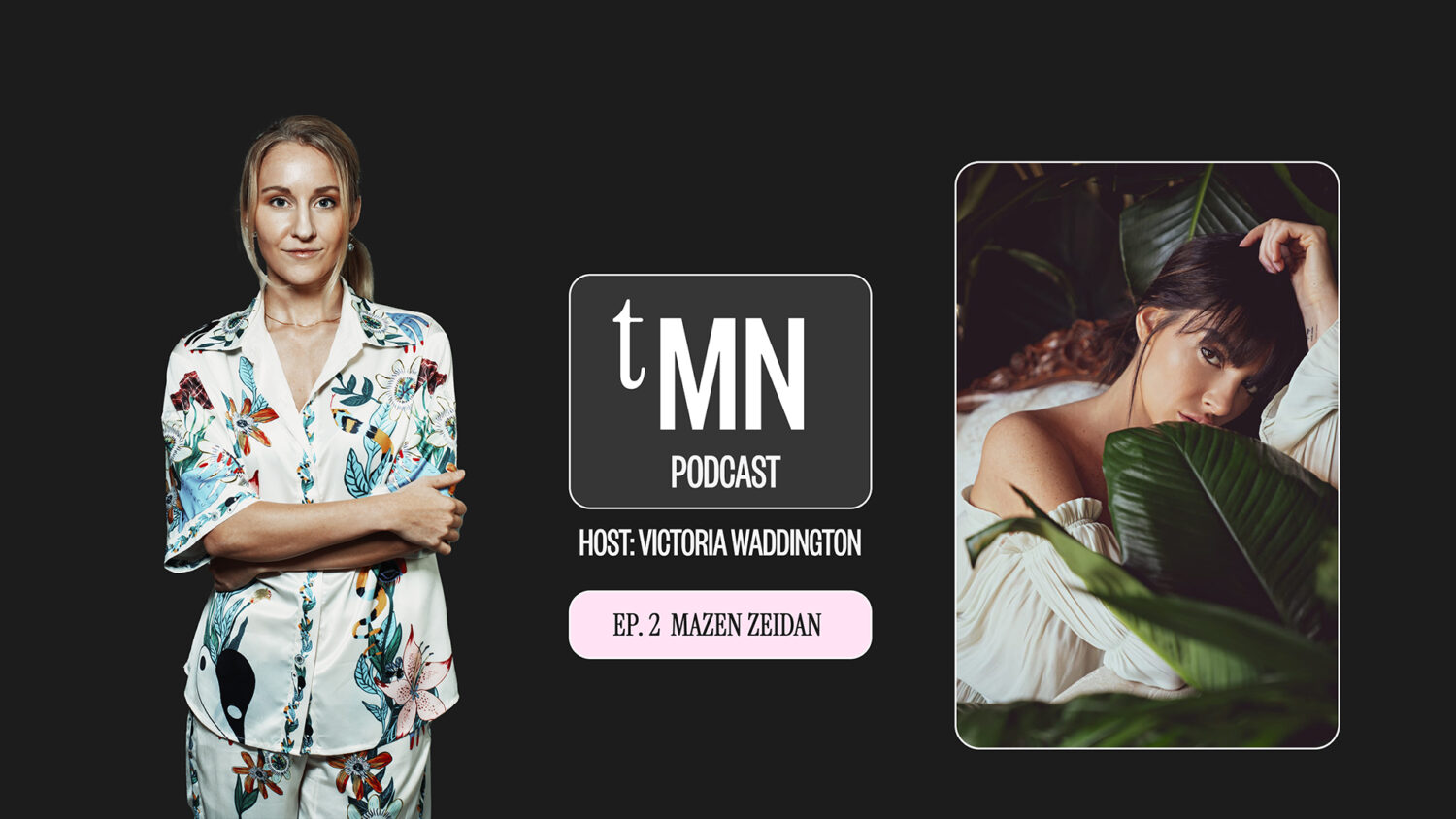
    In this episode, Victoria sits down with legendary Vancouver photographer and DJ Mazen Zeidan for a deep dive into the creative hustle. From staying relevant in a fast-changing industry to the unspoken rules of photographer etiquette, they unpack what it really takes to build a lasting career behind the lens. Plus, they explore how AI is shaking up the photography world — and what it means for the future of visual storytelling.

    🎧 Tune in for raw insight, real talk, and a few laughs along the way.

    Host – Victoria Waddington IG: @wavereport_

    Guest – Mazen Zeidan IG: @mazenzfoto

    Thanks to Yaletown Podcast for their space @yaletownpodcast

    www.themodelnetwork.com

    #Photography #AI #TMNPodcast #MazenZeidan #CreativeIndustry #VancouverArtists

  • Episode 1 – Cleo King

    Episode 1 – Cleo King

    Model Cleopatra King joins TMN for a powerful conversation about representation, resilience, and the realities of the fashion world. She shares her journey as a model of color, the challenges she’s faced, and the importance of authenticity in an ever-changing industry. Raw, real, and inspiring—don’t miss this episode! Follow Cleo on IG: @akacleo

    #fashion #model #modeling #runway #fashionweek #agency #womenofcolor #tiktok #instagram

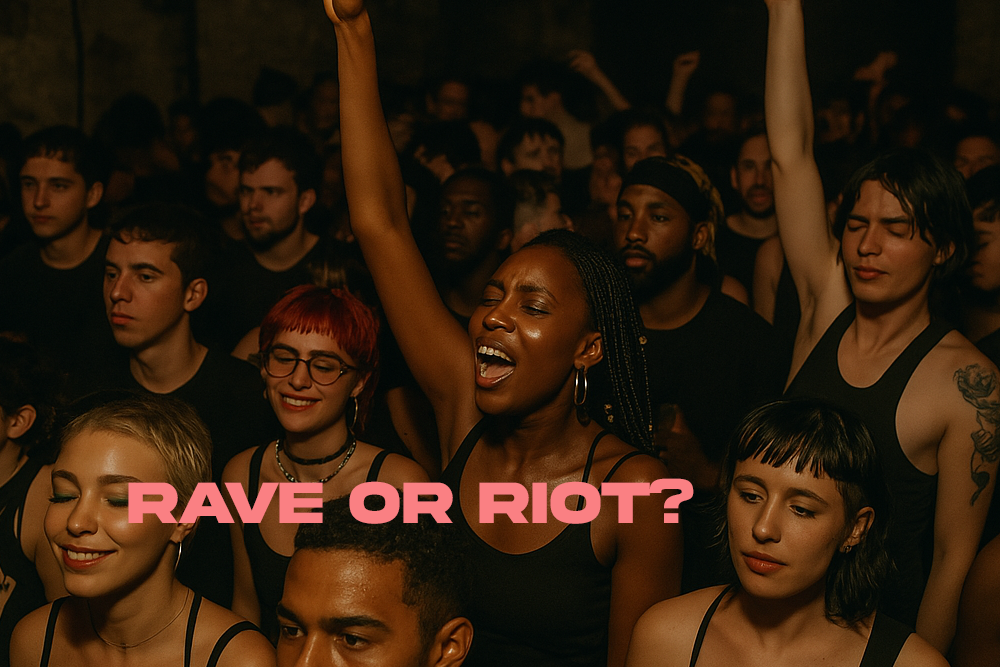
  • Rave or Riot?

    Rave or Riot?

    How Underground Club Kids And the Queer BIPOC Communities Are Resisting Mainstream Co-Opting

    “The minute the algorithm finds it, it’s already dead,” says Kia, a DJ affiliated with New York’s queer techno collective INFERNO. We’re sitting on the steps outside Public Records, a Brooklyn venue known for its minimalism and community-first curation. For Kia and many like them, underground nightlife isn’t a backdrop for content creation—it’s a site of resistance, survival, and self-definition.

    rave or riot

    The New Underground: Post-Algorithm Rebellion

    The cycle is familiar: subculture becomes cool, gets commodified, and is eventually sanitized for mass appeal. But today’s underground is more agile, more globally networked, and more intentional. Unlike past waves that were eventually swallowed by mainstream culture, this generation is harder to pin down — operating fluidly across borders, digital platforms, and DIY spaces with a heightened awareness of how culture gets co-opted.

    “We’re not anti-growth,” says Kia, a DJ and organizer based in Berlin. “We’re anti-extraction. There’s a difference.” It’s not about staying small for the sake of exclusivity — it’s about protecting the integrity of spaces that prioritize people over profit.

    Underground club scenes today are as much about music and aesthetics as they are about building systems of care: shared resources, safer spaces, and platforms that uplift rather than exploit. These communities are actively resisting surveillance culture, gentrification, and the pressure to cater to algorithmic tastes. The dancefloor isn’t just a site of escapism — it’s a rehearsal space for alternate futures, where new modes of connection, visibility, and resistance are practiced in real time.

    In a world obsessed with visibility, these scenes remind us that what happens off-grid can still shape the cultural mainframe.

    DJ

    Know The History: How The Queer and BIPOC Community Shape Club Culture

    Across major cities like London, Berlin, São Paulo, and New York, underground rave scenes are mutating in defiance of the hyper-visible, brand-co-opted club culture plastered across social feeds. These aren’t just parties — they’re living archives.

    As mapped in the 2014 essay “An Alternate History of Sexuality in Club Culture,” nightlife has long been a battleground where queer and trans communities carved out space, safety, and selfhood under the strobe lights. This history pulses through today’s collectives — from Papi Juice and Bubble_T in NYC to Pxssy Palace and BBZ in London — who are torchbearers of that legacy, remixing it with sharper politics, deeper community bonds, and an anti-corporate, pro-pleasure ethos. These raves aren’t curated for clout; they’re curated for survival.

    Dancefloors become protest sites. Joy is weaponised. Sound becomes sanctuary. And visibility? That’s just a byproduct — the real goal is collective liberation, sweaty and euphoric and completely unfiltered.

    “The danger is when brands want our look, not our values, We’re not an aesthetic. We’re a lineage of resistance.” Oscar Nunez, co-founder of Papi Juice.

    Papi Juice
    PAPI JUICE

    Community as Protest

    The underground has always been political. In the 80s and 90s, warehouse parties were havens for queer expression during the AIDS crisis and often policed or shut down. Today, collectives use parties to raise funds, spread awareness, and resist systemic violence.

    Pxssy Palace doesn’t just throw raves—they build community infrastructure. Founded in London in 2015 by Nadine Noor, along with co-founders Sade Giliberti and DJ bbz, Pxssy Palace emerged in response to the lack of inclusive, QTIBPOC-centered nightlife in the UK. Since then, they’ve grown into one of the most visible and vital collectives in the country, blending nightlife with direct action and cultural education.

    Their events fundraise for causes like trans youth support, legal aid for queer immigrants, and mental health resources for communities of color. During the pandemic, they launched the PP Emergency Fund, distributing thousands of pounds to queer creatives affected by lockdown.

    Noor—who has a background in community organizing and public health—views the dance floor as a site of radical healing. “We’re not just escaping,” she told The Guardian. “We’re building an alternative. Raving is resistance. It’s joy as protest.”

    Pxssy Palace also hosts panel talks, workshops, and activist teach-ins alongside their parties. Their safer spaces policy is printed on flyers and enforced at the door, and they collaborate with groups like UK Black Pride, Exist Loudly, and Black Trans Foundation to extend their impact beyond nightlife.

    Through Noor’s leadership, Pxssy Palace has become more than a collective—it’s a blueprint for what a liberated nightlife future can look like: unapologetically queer, radically Black and brown, and deeply rooted in care.

    Pxssy Palace
    PXSSY PALACE

    Safety Over Clout

    For many marginalized communities—especially queer, trans, and BIPOC ravers—the underground isn’t just about exclusivity; it’s about creating safe, self-governed spaces. That ethos manifests in venue choice, security, and door policies.

    Nowadays, a club in Ridgewood, Brooklyn, has implemented a widely respected safer space policy, including a dedicated care team, phone-free zones, and a no-questions-asked quiet room. Bossa Nova Civic Club, while temporarily closed due to a fire, was long known for being a gritty, inclusive haven for queer and BIPOC ravers in NYC’s Bushwick scene.

    NowadaysNYC
    NowadaysNYC

    Analog Revival and Digital Resistance

    In reaction to the hyper-documentation of club life, many underground events now ban phones entirely or encourage analog archiving through film photography, zines, mixtapes, and word-of-mouth flyers. This analog revival isn’t just an aesthetic throwback — it’s a political stance. By resisting real-time surveillance and algorithmic capture, these scenes reclaim intimacy and ephemerality as radical tools.

    In São Paulo, the collective Mamba Negra prints monthly rave zines packed with political essays, collage art, hand-drawn flyers, and set lists — a tactile response to a digital culture that flattens nuance. In London, BBZ runs a growing community archive that documents QTIBPOC nightlife on its own terms, creating a living record of a culture often erased or misrepresented.

    “We don’t want to disappear just because we’re not viral,” says Kareem, a DJ and contributor to BBZ’s archival project. “This is our legacy.” The act of archiving becomes both resistance and remembrance — a way to outlive the scroll, and assert that this culture, though often invisible to the mainstream, is deeply real, intentional, and worthy of preservation. In these analog gestures lies a refusal: to be seen only when it’s profitable, or palatable.

    Mamba Negra
    Mamba Negra

    Can the Underground Stay Underground?

    The cycle is familiar: subculture becomes cool, gets commodified, and is eventually sanitized for mass appeal. But today’s underground is more agile, more globally networked, and more intentional. Unlike past waves that were eventually swallowed by mainstream culture, this generation is harder to pin down — operating fluidly across borders, digital platforms, and DIY spaces with a heightened awareness of how culture gets co-opted.

    “We’re not anti-growth,” says Kia, a DJ and organizer based in Berlin. “We’re anti-extraction. There’s a difference.” It’s not about staying small for the sake of exclusivity — it’s about protecting the integrity of spaces that prioritize people over profit.

    Underground club scenes today are as much about music and aesthetics as they are about building systems of care: shared resources, safer spaces, and platforms that uplift rather than exploit. These communities are actively resisting surveillance culture, gentrification, and the pressure to cater to algorithmic tastes. The dancefloor isn’t just a site of escapism — it’s a rehearsal space for alternate futures, where new modes of connection, visibility, and resistance are practiced in real time.

    In a world obsessed with visibility, these scenes remind us that what happens off-grid can still shape the cultural mainframe.

    Techno

  • The New Grunge Renaissance: Why 2025 Feels Like 1995 Again

    The New Grunge Renaissance: Why 2025 Feels Like 1995 Again

    The Return of Grunge: More Than Just Nostalgia?

    Fashion and music have always been cyclical, but the resurgence of grunge aesthetics and sound in 2025 goes beyond a mere 90s revival. From the rise of Gen-Z grunge artists to the return of distressed denim, flannel, and DIY punk ethics, this new wave is redefining what it means to be anti-establishment in an era of hyper-curation and digital perfection.

    Grunge, born from the underground scenes of Seattle in the late 80s and early 90s, was more than just a sound—it was an ethos. Today, that ethos is finding new life in the post-pandemic digital rebellion. As social media breeds polished influencers, the younger generation is seeking something raw, unfiltered, and imperfect.

    nirvana

    Fashion: The Anti-Trend of 2025

    The fashion world is experiencing a deliberate rejection of fast fashion and overly curated aesthetics. Brands like Balenciaga, Diesel, and Acne Studios are tapping into this resurgence with deconstructed silhouettes, oversized layering, and an intentional sense of chaos.

    Fashion historian Maya Delgado notes, “In the 90s, grunge was about repurposing thrift store finds and rejecting the luxury fashion world. Today, we see major fashion houses attempting to recreate that aesthetic, but the true movement is happening at the grassroots level—on Depop, in underground streetwear collectives, and among young designers making one-off, hand-distressed pieces.”

    Key elements of the 2025 grunge aesthetic include:

    • Distressed, oversized knitwear (à la Kurt Cobain’s MTV Unplugged sweater)
    • Band tees layered over turtlenecks
    • Vintage flannels and baggy jeans
    • Combat boots, Doc Martens, and scuffed Converse
    • DIY customization—patches, rips, safety pins, and Sharpie graffiti on clothing
    grunge 2025

    Music: The Sound of a New Rebellion

    The music industry is witnessing a grunge-inspired revival led by artists blending 90s grit with modern production techniques. From distorted guitar riffs to raw, emotive vocals, the resurgence isn’t just about fashion—it’s a rejection of overproduced, algorithm-friendly pop.

    Rising Gen-Z grunge icons include:

    • Beabadoobee – Channeling Smashing Pumpkins-esque dream grunge with a modern edge.
    • D4vd – Blending alternative rock with grunge-influenced melodies.
    • Ethel Cain – A haunting, Southern Gothic take on the genre’s darker themes.
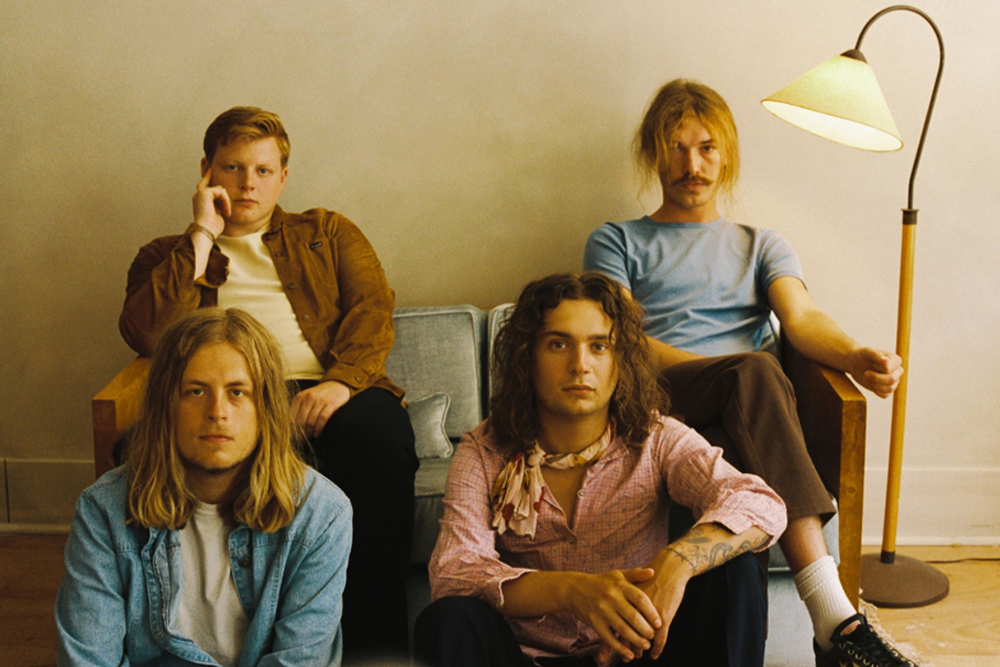
    • The Backseat Lovers – Mixing indie with grunge’s signature melancholic tones.
    • Paris Texas – A duo fusing grunge with hip-hop elements, reminiscent of the genre’s early punk influence.

    The DIY ethos of grunge is also returning through independent music distribution platforms like Bandcamp and SoundCloud, allowing artists to bypass major labels in favor of underground credibility.

    backseat

    The Cultural Shift: Why Grunge Feels Relevant Again

    The 90s grunge explosion was fueled by economic disenchantment, political distrust, and a rejection of consumerism—themes that feel just as relevant today. Gen Z, dealing with climate anxiety, economic instability, and social media burnout, is turning to grunge’s raw, rebellious energy as a means of self-expression.

    Cultural analyst Theo Hargrove explains, “This isn’t just a fashion trend or a music movement. It’s a rejection of perfectionism, of hyper-productivity, of curated online identities. Grunge is about embracing imperfection, both aesthetically and emotionally.”

    Is This a True Revival or Just Another Trend Cycle?

    While high-fashion brands are capitalizing on the look, authentic grunge revivalists are keeping the movement underground. The difference between 90s grunge and today’s resurgence is that Gen Z has the internet, making it easier for niche subcultures to thrive without needing mainstream validation.Whether this grunge renaissance will become a lasting cultural shift or another fleeting trend remains to be seen, but one thing is clear: imperfection is back in style.

    rebellion
  • Low-Key Luxe: How Quiet Luxury is Evolving

    Low-Key Luxe: How Quiet Luxury is Evolving

    The Shift from Flash to Subtle Wealth

    For decades, luxury was synonymous with logos, loud branding, and overt displays of wealth. The early 2000s, driven by the likes of Louis Vuitton monogram bags, Gucci belts, and Versace prints, made wealth something to be advertised. However, in recent years, an anti-trend has emerged—a form of luxury that is so refined it almost disappears: quiet luxury. The concept isn’t new. The likes of Loro Piana, Brunello Cucinelli, and The Row have long catered to the discreet elite. But post-pandemic shifts in consumer values, economic turbulence, and a rejection of influencer-driven fast fashion have given rise to a new wave of low-key luxe that is defining how people dress, shop, and express wealth in 2025.

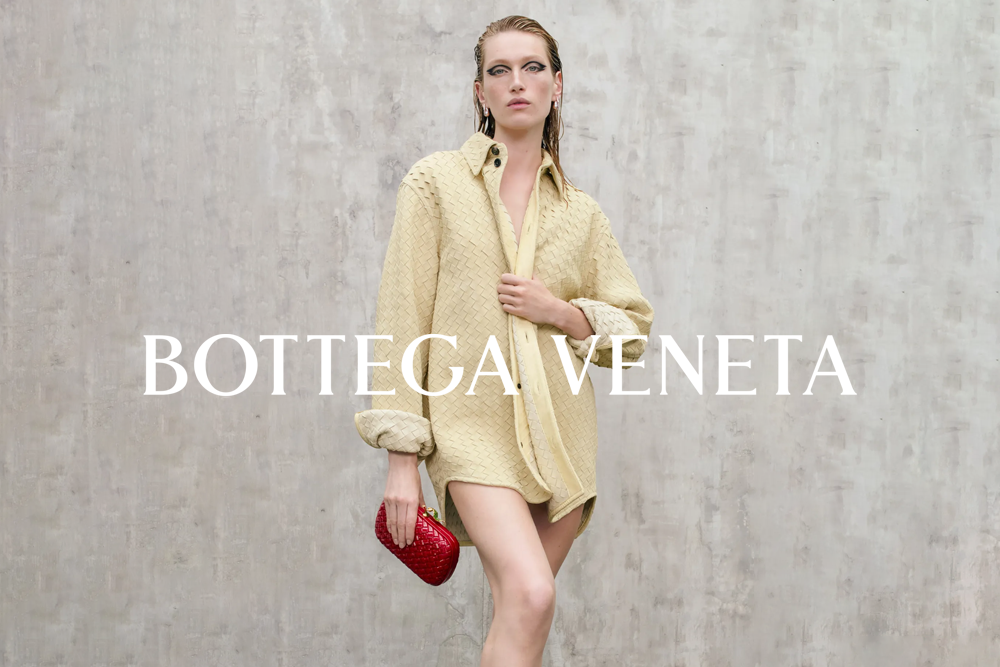
    Bottega Veneta

    The Silent Statement: What Defines Quiet Luxury Today?

    Quiet luxury is about timelessness, exceptional craftsmanship, and an absence of obvious branding. The appeal is in the details—the perfect cut of a jacket, the subtle sheen of a well-woven fabric, and the whisper of heritage rather than the scream of a logo.

    Fashion industry analyst Avery Nicholson explains, “It’s not about affordability; it’s about intention. Consumers are moving away from trend-driven consumption and looking for investment pieces that are built to last.”

    This has led to the rise of designers and brands who embody understated opulence:

    • Jil Sander – Minimalist tailoring with an edge.
    • Totême – A Stockholm-based label redefining the modern uniform.
    • Khaite – Luxurious essentials with an elevated touch.
    • Bottega Veneta (Matthieu Blazy era) – A focus on craftsmanship and texture over logos.
    Jil Sander

    The Influence of Pop Culture: From Succession to Sofia Richie Grainge

    If one piece of media encapsulated the quiet luxury aesthetic, it was HBO’s Succession. The wardrobes of the Roy family, curated by costume designer Michelle Matland, showcased a world where wealth was embedded in the very fabric of their clothes rather than the logos on them. Think cashmere coats, tailored suits, and bespoke shoes—all whispering money without announcing it.

    Succession

    A more recent cultural icon of quiet luxury is Sofia Richie Grainge. The model and socialite’s wedding to Elliot Grainge in 2023 was a masterclass in quiet wealth—featuring custom Chanel, vintage Cartier, and neutral, well-tailored staples. Her style pivot from flashy influencer trends to old-money elegance ignited a social media movement, inspiring thousands to embrace the “old money aesthetic.”

    Sofia Richie Grainge

    How Gen Z is Shaping the Future of Quiet Luxury

    While quiet luxury was once reserved for the old elite, Gen Z’s spending habits are shifting in a way that is reshaping the category. Unlike millennials, who were drawn to logo-heavy aspirational fashion, Gen Z leans towards “stealth wealth”, valuing sustainability, craftsmanship, and uniqueness over overt branding.

    Luxury resale platforms like The RealReal and Vestiaire Collective have surged in popularity as young consumers seek out heritage pieces from Phoebe Philo-era Céline, Prada’s minimalist 90s collections, and archival Hermès. According to fashion historian Dr. Elena Hartmann, “Gen Z is redefining luxury. They want pieces with a story, a sense of longevity. There’s an appreciation for independent designers like Peter Do and The Row because their approach to fashion feels personal and unattached to mass consumption.”

    Tech’s Influence: AI, E-Commerce, and the Future of Stealth Wealth

    With the rise of AI-driven fashion experiences, brands embracing quiet luxury have had to adjust their digital strategies. Instead of relying on loud, influencer-driven marketing, labels like Lemaire and The Row are turning to immersive, editorial-style e-commerce that mirrors the in-store luxury experience. Fashion tech expert James Lin points out, “AI is allowing brands to personalize shopping experiences, offering bespoke recommendations based on a shopper’s habits rather than pushing trends. The future of quiet luxury is digital, but it’s discreetly curated, not algorithmically forced.”

    The Row

    Is Quiet Luxury Here to Stay?

    Fashion is cyclical, but the core tenets of quiet luxury—quality, timelessness, and authenticity—suggest that this shift isn’t just another passing trend. In a world where fast fashion dominates, the desire for permanence and craftsmanship may be more radical than ever before.

  • Climate Change Demands Urgent Action Global Leaders Today

    Climate Change Demands Urgent Action Global Leaders Today

    Vestibulum ante ipsum primis in faucibus orci luctus et ultrices posuere cubilia. Curae onec velit neque, auctor sit. Vivamus magna justo, lacinia eget consectetur sed, convallis at tellus. Proin eget tortor risus. Mauris blandit aliquet elit, eget tincidunt nibh pulvinar.

    Curabitur non nulla sit amet nisl tempus convallis quis ac lectus. Pellentesque in ipsum id orci porta dapibus. Praesent sapien massa, convallis a pellentesque nec, egestas non nisi. Proin eget tortor risus. Donec sollicitudin molestie malesuada. Donec rutrum congue leo eget malesuada. Lorem ipsum dolor sit amet, consectetur adipiscing elit.

    Vestibulum ante ipsum primis in faucibus orci luctus et ultrices posuere cubilia. Curae onec velit neque, auctor sit. Vivamus magna justo, lacinia eget consectetur sed, convallis at tellus. Proin eget tortor risus. Mauris blandit aliquet elit, eget tincidunt nibh pulvinar.

    “Pellentesque in ipsum id orci porta dapibus. Curabitur aliquet quam id dui posuere blandit. Proin eget tortor risus. Nulla porttitor accumsan tincidunt. Nulla porttitor accumsan tincidunt. Proin eget tortor risus. Proin eget tortor risus. Donec sollicitudin molestie malesuada. “

    Donec sollicitudin molestie malesuada. Nulla quis lorem ut libero.

    Vestibulum ante ipsum primis in faucibus orci luctus et ultrices posuere cubilia. Curae onec velit neque, auctor sit. Vivamus magna justo, lacinia eget consectetur sed, convallis at tellus. Proin eget tortor risus. Mauris blandit aliquet elit, eget tincidunt nibh pulvinar.

    Vestibulum ante ipsum primis in faucibus orci luctus et ultrices posuere cubilia. Curae onec velit neque, auctor sit. Vivamus magna justo, lacinia eget consectetur sed, convallis at tellus. Proin eget tortor risus. Mauris blandit aliquet elit, eget tincidunt nibh pulvinar.

  • A Look Back – The Year Everything Got Personal

    A Look Back – The Year Everything Got Personal

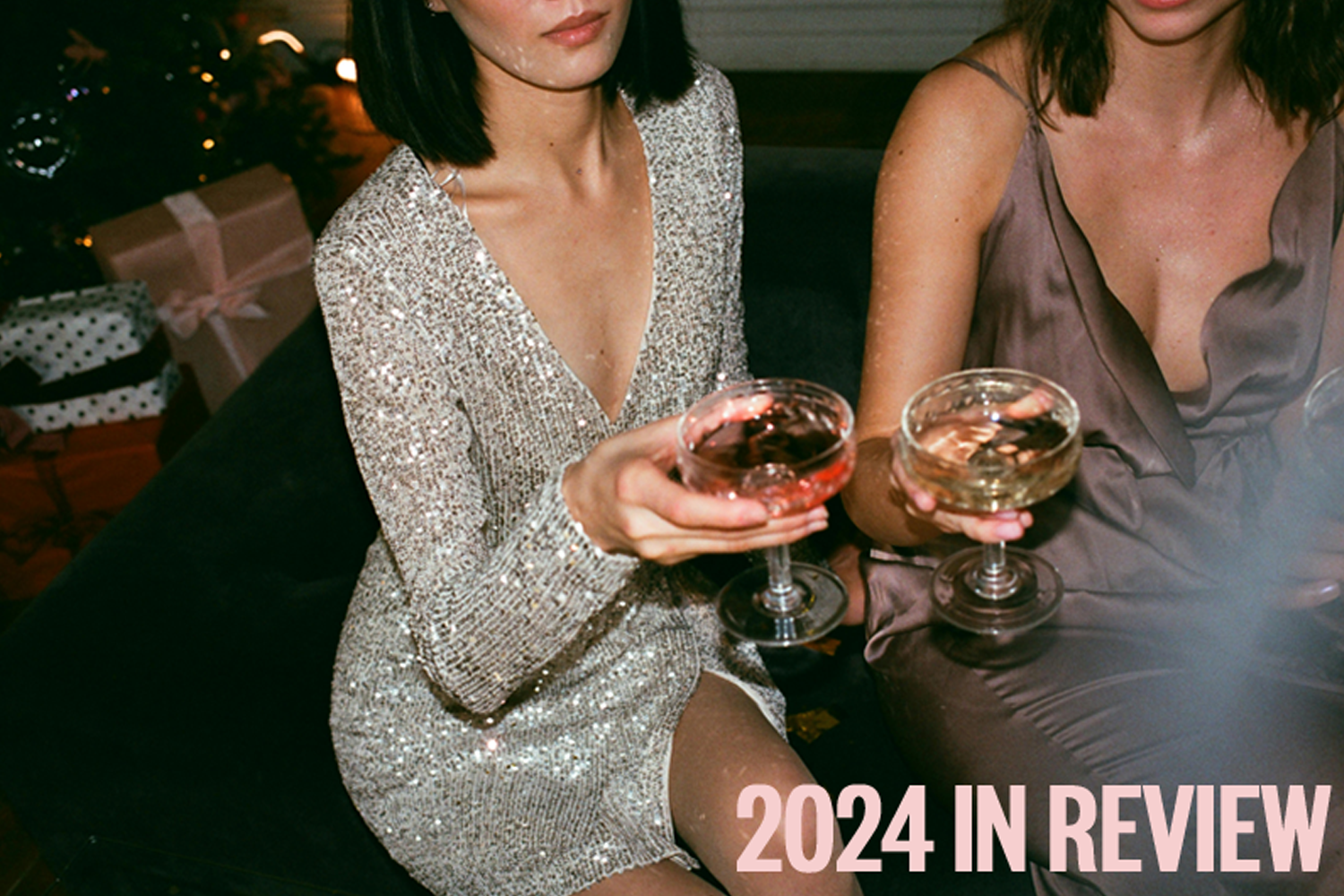
    If 2023 was about bouncing back, then 2024 was the year we stepped up and owned it. Across fashion, beauty, home design, and even tech, personal style wasn’t just what you wore anymore—it was how you lived. And in true 2024 fashion, it was bold, nostalgic, and unapologetically forward-looking.

    Fashion this year felt like a time machine spinning out of control—in the best way possible. Designers dove deep into every era’s wardrobe, from the sleek optimism of the 1960s to the gritty glam of the early 2000s. The result? A mash-up that redefined the rules. Power shoulders returned with a vengeance, but they were softer, less corporate, and more “I run the world.” Metallic fabrics shimmered on runways and streets alike, making every outfit feel a little more space-age. And gender lines? Blurred completely. Tailored suits, flowing skirts, and experimental silhouettes became universal, not confined to one section of the store.

    Fashion Optimism

    If you wanted to stand out, electric cobalt blue was your color. It dominated everything from evening gowns to sneakers, with its bold energy setting the tone for a confident year. But for those who craved subtlety, muted terracotta and fresh neo-mint green provided balance. Sustainability wasn’t just a trend in 2024—it was the standard. Thrift stores became fashion meccas, upcycling became an art form, and luxury brands leaned into circular design. It wasn’t just about looking good; it was about doing good.

    Beauty followed suit, ditching the heavy contour of the 2010s for something more natural, more real. Skinimalism continued its reign, with routines focused on fewer, smarter products that did more. Biotech took center stage, with lab-grown collagen and algae-based serums proving that science and sustainability can coexist beautifully. For makeup, soft glam made its comeback with muted palettes, satin finishes, and glossy lips stealing the show. But when it came to eyes, 2024 didn’t hold back—graphic eyeliner and metallic shadows turned heads everywhere. And speaking of turning heads, copper hair became the look, with fiery shades lighting up red carpets and Instagram feeds.

    skinimalism

    Even our homes got a makeover this year. “Organic minimalism” became the buzzword in interior design, blending the simplicity of clean lines with the warmth of natural materials. Earthy tones like olive green and sandy beige dominated living spaces, while textures like bouclé and linen made rooms feel cozy yet sophisticated. Curves softened furniture, plants turned apartments into jungles, and sustainable materials like bamboo and reclaimed wood redefined what it meant to live consciously. Living walls and hanging gardens were no longer just for hipster cafés—they became the centerpiece of modern homes.

    Style didn’t stop at the closet or the living room. Accessories and gadgets got in on the action, too. Mini bags stayed in the mix for nights out, but oversized totes made a comeback for day-to-day life—finally, a practical trend. Platform shoes dominated, adding inches of attitude to every step, while wearable tech evolved from geeky to chic. Smart rings and bracelets blended seamlessly into everyday outfits, making tracking your steps or paying for coffee look impossibly cool.

    If 2024 had a personality, it would be a mash-up of quiet luxury and loud nostalgia. The understated elegance of tailored pieces in buttery fabrics whispered sophistication, while retro throwbacks screamed individuality. Skinny jeans made a tentative return alongside ballet flats, igniting debates on TikTok, but they felt fresh paired with today’s oversized blazers and bold accessories. Y2K was still hanging on, but the early 2010s started to sneak in, reminding everyone just how cyclical style can be.

    luxury and nostalgia

    And then there was the tech. AI stepped up in a big way this year, infiltrating every corner of the style world. Virtual try-ons became the norm, making online shopping smarter and reducing waste. AI-assisted design blurred the line between human creativity and machine precision, producing outfits that felt both futuristic and deeply personal. But even as digital fashion boomed, a counter-movement emerged. Handmade, artisanal goods surged in popularity, with pottery, embroidery, and custom tailoring proving that sometimes, imperfection is perfection.

    2024 wasn’t just about looking good—it was about meaning something. Fashion became activism, beauty became self-care, and homes became safe havens. It was a year where style wasn’t confined to the surface but dug deep into how we express who we are and how we connect with the world around us.

    activism

    As the year wraps up, one thing is clear: 2024 didn’t just redefine style—it redefined how we live it. Here’s to keeping it bold, thoughtful, and a little unpredictable in 2025.

  • Style Icons Emerging  this Decade

    Style Icons Emerging this Decade

    Redefining Fashion Standards in the 2020s

    With 2025 just around the corner, we find ourselves at a crucial halfway point in the 2020s—a moment ripe for reflection and recognition of the style icons who’ve shaped this era. While fashion may never stand still, it’s clear that this decade is rewriting the rules in powerful and resonant ways, often blurring the lines between runway and street, gender norms, and sustainability. From daring trendsetters to cultural movements, these style leaders have left a mark that goes far beyond clothing—it’s a cultural renaissance redefining how we express who we are.

    The Cultural Rebels: Breaking Gender Norms

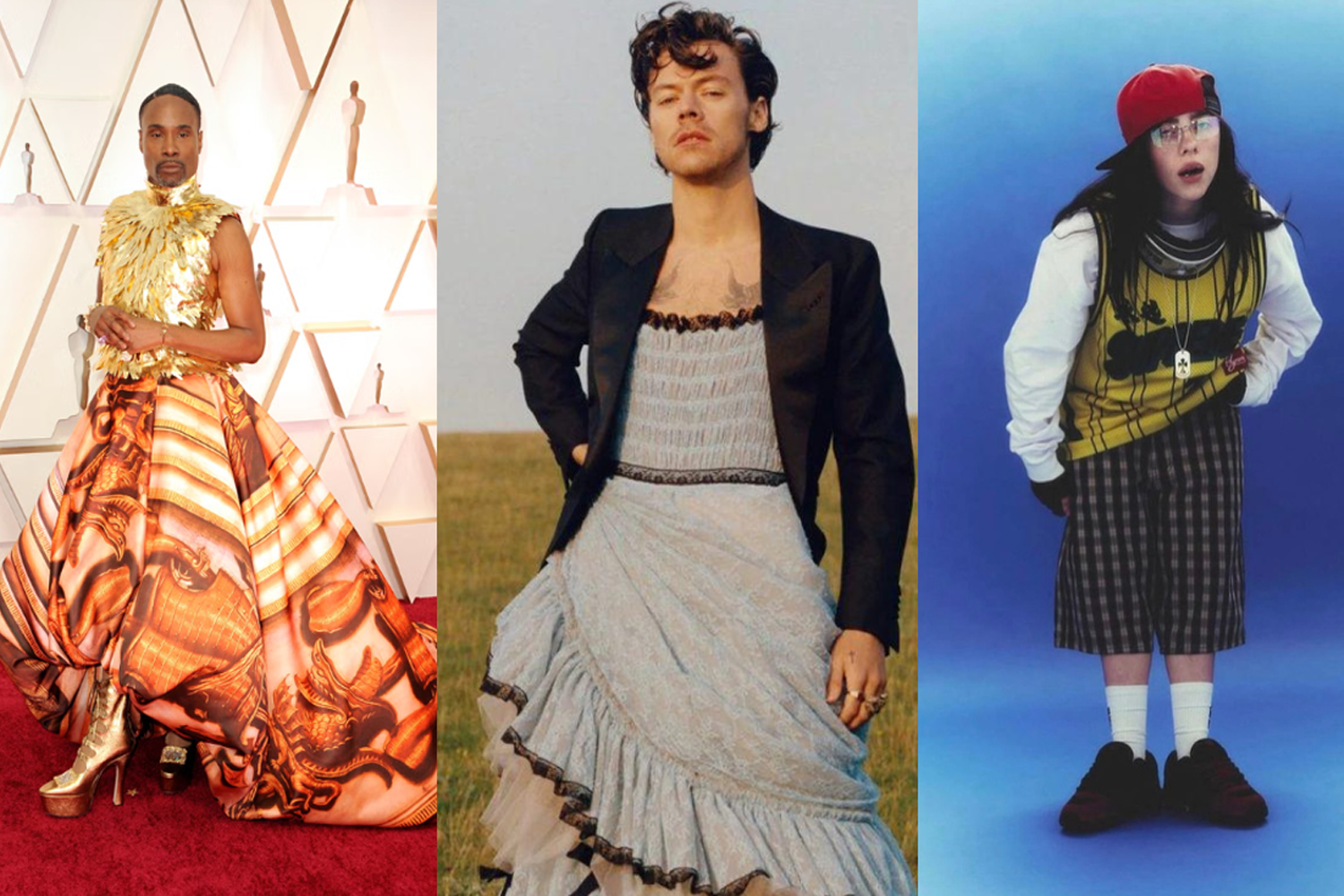
    In the early years of the 2020s, fashion became a battleground for cultural shifts around gender fluidity and inclusivity. Few figures embodied this evolution as powerfully as Billy Porter, a performer whose fashion choices are nothing short of revolutionary. From the moment he stepped onto the 2019 Oscars red carpet in a tuxedo gown designed by Christian Siriano, Porter has used fashion to challenge stereotypes and provoke dialogue. His blend of masculinity and femininity in theatrical, boundary-pushing ensembles has turned every red-carpet appearance into a statement piece—a moment to be dissected, admired, and reinterpreted by a global audience.

    Porter’s influence extends far beyond the fabrics he wears; he’s a vocal advocate for self-expression, LGBTQ+ rights, and dismantling traditional gender norms in every facet of life. Whether it’s a billowing cape, sequined suit, or a corseted gown, Porter consistently transforms fashion into a platform for empowerment and social change. By showcasing how clothing can reflect fluidity and fearlessness, Porter has inspired designers and audiences alike to embrace their true selves unapologetically.

    Harry Styles, meanwhile, has echoed this ethos by incorporating feminine touches into traditionally masculine looks, appearing on the cover of Vogue in a flowing gown. Styles’ approach to blending sartorial elements demonstrates the power of subversion and self-expression, particularly for younger generations exploring their own identities.

    Billy, Harry, Billies icons of personal style

    Adding to this cultural revolution is Billie Eilish, whose early penchant for oversized streetwear rejected the hypersexualization of women in the public eye. As her style evolved, Eilish demonstrated how personal expression can shift, embracing more fitted red-carpet attire while maintaining her trademark edge. Together, these icons have turned fashion into a canvas for dialogue, self-empowerment, and transformation.

    The Streetwear Renaissance: Virgil Abloh and His Legacy

    Any retrospective on the 2020s would be incomplete without acknowledging Virgil Abloh, who tragically passed away in 2021 but left an indelible mark on fashion. As the first Black artistic director of Louis Vuitton’s menswear and founder of Off-White, Abloh’s influence redefined luxury fashion through streetwear’s lens. He created a world where sneakers meet couture and hoodies rub shoulders with fine tailoring—where fashion’s boundaries blur, and accessibility meets aspiration.

    Virgil Abloh street style

    Abloh’s collaborations with Nike, Ikea, and artists like Kanye West reshaped not only the fashion landscape but also the culture at large. His signature quotation-mark branding, irreverent approach, and commitment to uplifting Black creatives inspired a new generation of designers, ensuring that his vision continues to reverberate across runways and city streets.

    K-pop’s Fashion Takeover

    The 2020s have witnessed a global wave of K-pop influence, which extends far beyond music and dance. K-pop idols like BLACKPINK’s Lisa, BTS’s J-Hope, and EXO’s Kai have become fashion icons in their own right, commanding front-row seats at major fashion weeks and inking collaborations with high-profile brands. Their fearless approach to fashion—mixing streetwear with luxury couture and gender-blurring ensembles—has cemented their status as global style icons.

    Black Pink Style icons

    The reach of K-pop stars is nothing short of massive; their influence transcends borders, introducing millions of fans to new styles and pushing brands to evolve alongside the genre’s diverse and highly engaged fan base. With partnerships with luxury labels like Chanel, Gucci, and Louis Vuitton, K-pop idols have redefined what it means to be a celebrity fashion influencer, leveraging their visibility to blend tradition with modernity.

    Sustainability Stars: Leading the Green Revolution

    As the climate crisis escalated, sustainable fashion moved from a niche concern to the heart of the industry’s discourse. Enter Stella McCartney, whose advocacy for animal-free, eco-friendly fashion predates the 2020s but whose influence crescendoed during this period. She has become a symbol of high-fashion sustainability, pushing for innovative fabrics and circular fashion models while maintaining luxury aesthetics.

    Gabriela Hearst style icon

    Gabriela Hearst, another key figure, brought sustainability to the runway with elegant minimalism, using deadstock fabrics and promoting transparency in production. Her work at Chloé cemented her status as a leader in green fashion, proving that elegance and eco-consciousness are not mutually exclusive.

    Digital Couture: The Rise of Virtual Influencers and Meta Fashion

    In a decade where technology transformed every facet of our lives, fashion was no exception. Virtual influencers like Lil Miquela, a computer-generated model, rose to prominence and blurred the lines between reality and digital fantasy. Digital fashion, NFTs, and meta-fashion houses emerged, creating a parallel universe where style knows no physical limits.

    The rise of virtual fashion shows during the COVID-19 pandemic accelerated this transformation. Designers like Balenciaga’s Demna embraced the virtual world, creating immersive digital experiences that captivated global audiences and cemented the role of tech in modern fashion storytelling.

    Celebrating Inclusivity: The Era of Diversity

    Paloma Elsesser style icon

    The 2020s marked a seismic shift in fashion’s relationship with inclusivity. Style icons such as Paloma Elsesser, a trailblazing plus-size model, and Precious Lee, another advocate for body diversity, shattered outdated beauty standards and brought representation to the forefront. This decade has celebrated different body shapes, sizes, and backgrounds, moving toward a more inclusive and empowering industry.

    Designers like Prabal Gurung and Christian Siriano consistently showcased collections that honored diversity and spoke to the need for representation in all aspects of fashion, from runway to retail.

    The Signature Style Icons

    Among the standout personalities is Zendaya, whose red-carpet prowess has earned her status as a true fashion chameleon. Whether channeling Old Hollywood glamor or embracing bold, futuristic designs, Zendaya exemplifies fashion’s power to tell a story. With Law Roach as her stylist, she’s reshaped what it means to be a young, fearless style icon.

    Zendaya style icon

    Another prominent figure is Timothée Chalamet, whose effortless blend of high-fashion tailoring, streetwear elements, and gender-blurring silhouettes has made him a style touchstone for the decade’s youth. Together, these icons embody the freedom and fluidity that define 2020s style.

    Moving Toward 2025: What’s Next?

    As we stand at the halfway mark of this defining decade, one thing is certain: the fashion standards of the 2020s are still being written, deconstructed, and reimagined. We’ve moved beyond the binary, embraced sustainability, and redefined luxury and streetwear. The next five years will bring new challenges, voices, and visions, but the commitment to authenticity, creativity, and inclusivity is here to stay.

    The fashion icons of today are more than style arbiters; they’re cultural architects shaping the world we live in. As we approach 2025, their influence will continue to inspire and redefine how we see ourselves and the clothes we wear. So keep your eyes on the runways, red carpets, and streets—because the style revolution of the 2020s is just getting started.

    Sources

    1. Vogue Magazine
      Articles and interviews featuring Harry Styles, Billy Porter, Zendaya, and Timothée Chalamet’s impact on modern fashion.
      www.vogue.com
    2. Louis Vuitton and Virgil Abloh’s Legacy
      Coverage of Virgil Abloh’s influence on luxury fashion, streetwear, and his role at Louis Vuitton and Off-White.
      www.louisvuitton.com | www.off—white.com
    3. Sustainable Fashion Leaders – Stella McCartney and Gabriela Hearst
      Information on their sustainable practices, innovations, and influence on eco-friendly fashion.
      www.stellamccartney.com | www.chloe.com
    4. Fashion Revolution
      Resources and reports on inclusivity, ethical practices, and representation in the fashion industry.
      www.fashionrevolution.org
    5. Digital Fashion Insights from Balenciaga and Meta Fashion Developments
      Information on digital couture, virtual fashion shows, and the influence of technology in fashion.
      www.balenciaga.com | Articles from The Business of Fashion.
      www.businessoffashion.com
    6. Paloma Elsesser and Precious Lee – Representation in Fashion
      Coverage on their influence on body positivity and representation in the fashion industry.
      www.elle.com | www.harpersbazaar.com
    7. Zendaya’s Fashion Transformation and Collaborations with Law Roach
      Articles showcasing Zendaya’s red carpet looks and collaborations with her stylist, Law Roach.
      www.instyle.com | www.essence.com
    8. The Influence of Timothée Chalamet on Modern Men’s Fashion
      Coverage of his style impact on redefining menswear for a new generation.
      www.gq.com
    9. The Guardian – Articles on Sustainable and Inclusive Fashion Movements
      Insights on the changing landscape of fashion in terms of sustainability and representation.
      www.theguardian.com
    10. Runway Coverage from Fashion Weeks (Paris, London, New York)
      Collections and trends influencing global fashion norms.
      www.vogue.com/fashion-shows | www.nytimes.com/section/fashion

  • Sustainable Style: Fashion’s Climate-Conscious Revolution Hits the Runway

    Sustainable Style: Fashion’s Climate-Conscious Revolution Hits the Runway

    It wasn’t too long ago that the phrase “sustainable fashion” conjured up images of crunchy fabrics and shapeless frocks—stuff you’d find at a farmers market, not Paris Fashion Week. But like a storm that no one saw coming, the climate crisis slammed the brakes on fashion’s fast lane, forcing the industry to reckon with its oversized carbon footprint and a thirst for excess. Now, a new wave of designers, brands, and yes, even consumers, are steering the world’s most glamorous business toward something sexier: sustainability.

    In a world where “trending” often has the shelf life of a TikTok dance, this is no fleeting movement. It’s a full-blown culture shift, one stitched with sustainable materials, ethical practices, and a love affair with upcycling. It’s where fashion goes green—not just in color but in purpose.

    Stitching Together a New Story: The Material Makeover

    Let’s talk fabric. Traditional textiles, like polyester and conventional cotton, are straight-up toxic for Mother Earth. Polyester? It’s basically spun petroleum, taking centuries to decompose and shedding microplastics with every wash. Cotton? Sure, it’s natural, but it’s a water-guzzling, pesticide-laden monster. So what’s a designer to do? The answer lies in reinvention, and that’s where sustainable materials come in hot.

    Take organic cotton. No chemicals, way less water. The Textile Exchange reports it slashes water usage by as much as 91% compared to its thirsty conventional cousin. But cotton’s just the tip of the hemp leaf. Brands like Patagonia have long waved the eco-flag with hemp and linen—both hardy, low-water-use plants. There’s also Pangaia, the buzzy label behind minimalist hoodies made from seaweed fiber and recycled cotton. These aren’t your grandma’s knitting projects; they’re sleek, durable, and designed to turn heads.

    cotton feild

    But if you really want to talk innovation, look no further than recycled materials. Turning trash into treasure isn’t just a trope—it’s high fashion. Adidas and their “Parley for the Oceans” line are proof that beach-cleaning plastic can look damn good when reimagined into sneakers. The idea? Wear your impact on your feet, and kick some eco-ignorance to the curb.

    Ethical Practices: No More Sweatshops in the Shadows

    For decades, the industry’s dirty little secret was its people. Garment workers slaving away for a pittance, factories with working conditions straight out of a dystopian novel. But the tide is turning. The ethical fashion movement is pulling back the veil and demanding fairness, transparency, and humane working conditions.

    sweat shop workers

    Take Everlane, whose mantra might as well be “transparency or bust.” They map out their entire supply chain for curious shoppers, showing exactly where each piece of clothing was born and stitched. It’s not just about fair wages or safe factories; it’s about giving the makers their moment in the spotlight. Because real style isn’t just about looking good; it’s about doing good.

    Slow fashion is another beacon in the ethical revolution. Think fewer collections, higher quality, timeless pieces. Stella McCartney, a pioneer of the movement, shows that ethical fashion doesn’t have to sacrifice style. Her collections are cruelty-free, favoring faux leather and regenerated cashmere. It’s a middle finger to fast fashion, telling shoppers to invest in pieces that outlast the next Instagram trend.

    Upcycling: Turning Yesterday’s Clothes Into Tomorrow’s Must-Haves

    Upcycling has taken the fashion world by storm. Unlike recycling—which breaks down materials—upcycling is all about taking old clothes and transforming them into something new and fabulous. It’s DIY at its peak, an art form that’s shaking up even the most exclusive runways.

    sustainable clothes

    Luxury house Maison Margiela gets it. Their Artisanal collection reimagines old garments into couture pieces. The process isn’t just green; it’s genius-level creativity. Smaller brands like Re/Done have built an entire empire out of upcycling vintage denim, turning worn-out jeans into covetable streetwear. It’s high fashion that’s both cool and conscious, proving that sustainability can have serious swagger.

    But it’s not just designers jumping on the upcycle train. DIY culture is thriving. Pinterest boards are brimming with projects showing how to repurpose that old concert tee or the jacket you almost threw out. Personal style meets sustainability—and the earth heaves a sigh of relief.

    Designers Leading the Charge—and Taking Us With Them

    Names like Stella McCartney whos SS24 collection has been crafted from 95% conscious materials, making it the most sustainable collection Stella McCartney has ever released. Eileen Fisher, and Vivienne Westwood are pushing boundaries, making sustainability sexy. But it’s not just about a few fashion-forward leaders. Entire companies are buying in. Kering—the luxury powerhouse behind Gucci and Balenciaga—has pledged to slash emissions and create a circular economy. Meanwhile, high-street brands like Zara and H&M have launched “Conscious Collections,” although skeptics warn that not every green label is as virtuous as it seems. Enter the term “greenwashing”—the trend’s dirty flip side. It’s a reminder that transparency is everything.

    stella mcCartney ss24

    And then, there’s the indie scene. Startups like Rent the Runway are rewriting consumption. Why buy what you can borrow? Their rental service lets you rock designer fits for a fraction of the cost, and when you’re done, it gets cleaned, prepped, and re-loaned, reducing waste and making luxury fashion more accessible.

    Consumers: The New Gatekeepers of Fashion

    It’s easy to point fingers at the industry, but the real shift starts with us—the buyers. Conscious consumerism is more than a trend; it’s a powerful demand for better choices. By choosing sustainable pieces, supporting ethical brands, and saying “hell no” to fast fashion’s excess, consumers are creating change. They’re sending the message that sustainability isn’t just “nice to have”; it’s non-negotiable.

    Movements like “Buy Less, Choose Well” champion curated wardrobes full of timeless, well-made pieces. The message is clear: Quality beats quantity. Repair that ripped seam, donate what you don’t wear, or find a clothing swap. Every choice makes a difference.

    Conclusion: Fashion’s Future Is Green, and It Looks Good

    The fashion world is standing at a crossroads. Down one path lies business as usual: overproduction, waste, pollution. Down the other? Sustainability, creativity, responsibility. With sustainable materials, ethical practices, and upcycling, the industry is slowly but surely pivoting toward a more conscious future.

    This isn’t a trend. It’s a revolution, a wake-up call, and a battle cry for change. So wear your values, make noise, and demand more. Because when fashion gets it right, it’s not just clothes—it’s a movement.

    Sources

    1. Textile Exchange – Organic Cotton Market Report
      For statistics on water usage and environmental benefits of organic cotton.
      www.textileexchange.org
    2. Patagonia’s Sustainability Practices
      Information on sustainable materials like hemp and organic cotton in Patagonia’s products.
      www.patagonia.com
    3. Adidas x Parley for the Oceans Initiative
      Details about using recycled ocean plastics in sportswear.
      www.adidas.com/parley
    4. Everlane – Ethical Fashion Supply Chain Transparency
      Documentation and transparency efforts in fashion manufacturing.
      www.everlane.com/transparency
    5. Maison Margiela’s Artisanal Collection
      Insights into luxury upcycling and sustainable couture.
      www.maisonmargiela.com
    6. Stella McCartney’s Sustainability Commitments
      Focus on cruelty-free fashion and circularity.
      www.stellamccartney.com
    7. Kering’s Sustainability Report
      Details about luxury conglomerate’s sustainability initiatives.
      www.kering.com/en/sustainability
    8. Fashion Revolution – Ethical Fashion Movement
      Resources on ethical labor practices and supply chain improvements.
      www.fashionrevolution.org
    9. Rent the Runway – Circular Fashion Model
      Information about the rental economy and its environmental benefits.
      www.renttherunway.com
    10. “Buy Less, Choose Well” – Slow Fashion Movement Insights
      Analysis of slow fashion principles, emphasizing quality over quantity.
      www.fashionrevolution.org

  • Bel Air

    Bel Air

    Bel Air

    Shot by: Arthur Ricane  Model: Stephanie


    Arthur Ricane

    Arthur Ricane

    Arthur Ricane

    Arthur Ricane

    Arthur Ricane

    Arthur Ricane